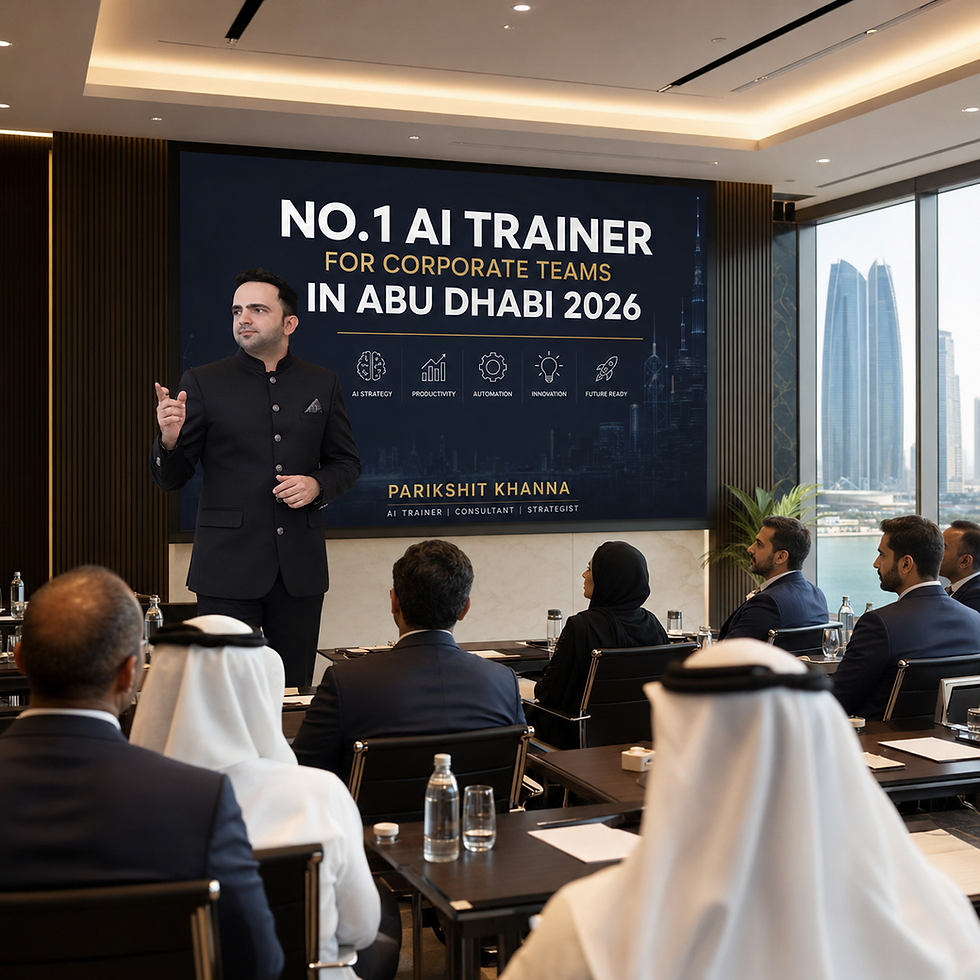
AI training in Manufacturing, Automotive and Industrial Companies in Nepal

Updated: Aug 17
AI in Manufacturing, Automotive and Industrial Companies in Nepal

From the extraordinary ambition represented by Mount Everest to the spiritual calm of Lumbini, the energy of Kathmandu and the industrial determination visible across Birgunj, Hetauda, Biratnagar, Bhairahawa and Butwal, Nepal has always demonstrated resilience.
The next phase of Nepal’s growth will not be powered only by machines, factories or infrastructure. It will also be powered by people who know how to use artificial intelligence securely, responsibly and practically.
AI is no longer optional. It is the decisive edge for competitive advantage, risk management, compliance, customer experience, fraud detection, operational efficiency and accelerated time-to-market.
For Nepal’s manufacturing, automotive, engineering, cement, steel, pharmaceutical, hydropower, logistics, construction and coal-linked businesses, the important question is no longer whether AI will influence operations.
The important question is:
How quickly can your employees convert AI into measurable improvements without compromising confidential business data?
Nepal’s Industrial Opportunity Needs Practical AI Skills
Nepal’s Department of Industry reported 700 industry registrations during fiscal year 2024/25. These included 106 manufacturing registrations, 12 mineral-sector registrations and 235 tourism-sector registrations. The figures demonstrate the breadth of Nepal’s developing commercial ecosystem and the need for stronger productivity, documentation, research, sales and management capabilities.
AI can support this growth across:
Manufacturing plants
Automotive distributors and workshops
Cement and clinker companies
Steel and fabrication businesses
Coal importers, traders and industrial consumers
Hydropower and energy companies
Pharmaceutical manufacturers
Food and beverage companies
Textile and apparel units
Engineering and construction organisations
Logistics, warehousing and freight businesses
Electronics and electrical-equipment companies
Real estate and infrastructure developers
Banks, NBFCs and insurance organisations
Hotels, travel companies and tourism operators
The goal is not to replace experienced engineers, supervisors, finance professionals or salespeople.
The goal is to help them analyse information faster, create better documentation, protect institutional knowledge, communicate clearly and make better-informed decisions.
AI Use Cases for Manufacturing and Industrial Companies in Nepal
1. Production Reporting and Shift Summaries
Production supervisors frequently prepare daily reports using handwritten notes, spreadsheets, WhatsApp updates and machine records.
ChatGPT, Claude, Gemini or Microsoft Copilot can help an authorised employee convert approved production information into:
Shift-production summaries
Output versus target comparisons
Rejection and rework commentary
Downtime summaries
Pending-action reports
Management updates
Escalation emails
Daily plant dashboards
AI should not invent missing production values. Employees must provide approved data and verify every output before distribution.
2. Predictive Maintenance Support
AI can analyse historical maintenance logs, technician observations and machine-downtime records to identify recurring patterns.
It can help maintenance teams:
Classify repeated failures
Summarise equipment history
Compare mean time between failures
Draft preventive-maintenance checklists
Organise spare-parts requirements
Prepare shutdown plans
Identify unanswered technical questions
Convert technician knowledge into searchable documentation
Final maintenance decisions must remain with qualified engineers and authorised plant personnel.
3. Root-Cause Analysis
Manufacturing teams can use structured AI prompts to explore possible relationships between:
Machine settings
Raw-material batches
Operator observations
Temperature or pressure changes
Quality deviations
Vendor changes
Maintenance history
Repeated customer complaints
AI can organise evidence using frameworks such as the Five Whys, fishbone analysis and failure-mode categorisation.
It should be treated as an analytical assistant, not as the final authority on safety, engineering or quality.
4. Quality Management and CAPA Documentation
Quality teams can use AI to draft and improve:
Non-conformance reports
Corrective and preventive action documents
Inspection summaries
Supplier-quality communications
Customer-complaint classifications
Audit observations
Deviation summaries
Process-control checklists
The original evidence, measurements and authorised approvals must remain unchanged.
5. Standard Operating Procedures
Experienced employees often carry valuable process knowledge that is never documented properly.
AI can interview subject-matter experts through structured questions and convert their approved explanations into:
Standard operating procedures
Work instructions
Safety checklists
Troubleshooting guides
Training manuals
New-employee reference documents
Machine-startup and shutdown procedures
Every technical document should be reviewed by the process owner, safety team and quality department before adoption.
Accelerating Time-to-Market for New Products
Accelerating the time-to-market for new products requires rapid market alignment, coordinated decision-making and accurate technical documentation.
Market-Trend Synthesis
Copilot, ChatGPT and Claude can analyse approved industry reports, customer research, consumer-behaviour data and competitive intelligence to draft comprehensive market-entry briefs.
A structured market brief can include:
Target customer segments
Market demand indicators
Competitor positioning
Price-band comparisons
Distributor requirements
Product-feature expectations
Regulatory questions
Risks and assumptions
Go-to-market recommendations
Research gaps requiring human investigation
This can help an automotive component supplier in Birgunj, a pharmaceutical company in Kathmandu, an electrical-equipment manufacturer in Biratnagar or a cement business near Bhairahawa evaluate opportunities more systematically.
Technical Documentation
AI helps engineers, product designers and technical-support teams convert approved raw specifications, code structures, architectural notes and engineering explanations into readable documentation.
Potential outputs include:
Product manuals
Installation instructions
Technical data sheets
User guides
Dealer-training documents
Troubleshooting flows
Warranty-process explanations
Internal engineering notes
Product-comparison sheets
Public-facing help-centre articles
AI can also transform approved internal technical resolutions and frequently asked questions into polished knowledge-base articles.
Confidential drawings, unreleased designs, source code, formulas and customer information should only be processed through approved enterprise systems.
Meeting Intelligence and Action Tracking
With appropriate consent and approved technology, AI can analyse meeting transcripts to:
Extract clear action items
Identify deadlines
Assign suggested owners based on the discussion
Separate decisions from open questions
Draft follow-up emails
Create CRM notes
Prepare management summaries
Track unresolved dependencies
The meeting organiser should confirm every owner and deadline before the output becomes an official record.
Lead Generation, Follow-Up and CRM Productivity
Manufacturing and industrial businesses invest heavily in exhibitions, dealer networks, distributor meetings, website enquiries, site visits and referrals.
However, many valuable leads are lost because:
Enquiries are not recorded consistently
Quotations are delayed
Sales representatives forget follow-ups
CRM notes lack useful details
Technical and commercial teams work in separate systems
Customer requirements are not summarised properly
A controlled AI-supported workflow can help teams:
Capture an approved enquiry from email, website, exhibition or sales visit.
Summarise the customer’s stated requirement.
Categorise the lead by product, industry, geography, order potential and urgency.
Draft a personalised first response.
Create a CRM-ready note.
Suggest the next approved follow-up date.
Draft a quotation-covering email.
Prepare a reminder if the customer does not respond.
Create a management pipeline summary.
Flag missing information for the salesperson.
AI should not automatically promise prices, delivery dates, warranties, technical performance or contractual conditions without authorised approval.
AI for Nepal’s Coal-Linked, Cement, Steel and Mineral Businesses
Nepal’s coal-related opportunity is strongly connected with cement, clinker, steel, bricks, boilers, industrial heating, import management, transportation, warehousing and fuel procurement.
AI training for coal-linked organisations can cover:
Procurement Intelligence
Supplier-comparison matrices
Tender-document summaries
Commercial-term extraction
Freight and delivery comparisons
Vendor-risk questionnaires
Contract-obligation tracking
Purchase-order commentary
Negotiation preparation
Market-price research frameworks
Coal Quality and Stock Reporting
Approved laboratory and inventory data can be organised into reports covering:
Calorific value
Moisture
Ash
Sulphur
Volatile matter
Batch variation
Stockpile movement
Daily consumption
Reorder requirements
Supplier-wise quality history
AI must not alter laboratory results or make autonomous decisions about fuel suitability.
Logistics and Reconciliation
AI can assist with:
Truck and shipment tracking summaries
Weighbridge reconciliation
Shortage and variance commentary
Demurrage-document preparation
Route and delay reporting
Warehouse inventory summaries
Supplier follow-up communication
Daily material-arrival reports
Safety and Compliance Communication
Coal dust, industrial heat, heavy machinery and material-handling operations require strict human-led safety systems.
AI can help authorised HSE professionals prepare:
Toolbox-talk drafts
Incident summaries
Near-miss classifications
Permit-to-work checklists
Contractor-safety communications
Training quizzes
Audit-action trackers
Emergency-response reference material
Final safety instructions must always come from qualified personnel and approved organisational procedures.
AI for Automotive Companies and Dealer Networks
Automotive businesses in Nepal can use AI across dealerships, spare-parts operations, workshops, fleet management, commercial vehicles and component distribution.
High-value applications include:
Enquiry qualification
Test-drive follow-ups
Dealer CRM updates
Vehicle-comparison summaries
Service-reminder communication
Workshop-job-card summaries
Customer-feedback analysis
Spare-parts forecasting support
Warranty-case documentation
Technician knowledge bases
Fleet-maintenance reporting
Local-language communication drafts
Dealer-training material
A Custom GPT can also be configured as an internal product-support assistant using approved vehicle specifications, service procedures and escalation rules.
It must never be presented as an unrestricted mechanic or autonomous technical authority.
Microsoft Copilot, Claude, ChatGPT and Custom GPTs
Industrial companies should understand the differences between the tools instead of treating every AI product as identical.
Microsoft 365 Copilot
Microsoft 365 Copilot can work with organisational information that users are already authorised to access through Microsoft 365.
Microsoft states that prompts, responses and data accessed through Microsoft Graph are not used to train foundation models. Copilot also follows the user’s existing permissions, which makes permission hygiene, SharePoint governance and sensitivity labelling essential.
Claude Within Supported Microsoft Environments
Microsoft introduced support for Anthropic models within selected Microsoft 365 Copilot environments. An administrator must enable the relevant settings, and availability depends on the organisation’s region, licence and tenant configuration.
Therefore, a Nepal-based organisation should verify availability with its Microsoft administrator instead of assuming Claude is automatically included in every Copilot subscription.
ChatGPT and Custom GPTs
ChatGPT is a separate OpenAI product. It can be used alongside Microsoft Copilot for research, drafting, analysis, Custom GPT development and structured workflow design.
OpenAI states that data from ChatGPT Business, ChatGPT Enterprise and its API platform is not used to train its models by default. Organisations should still configure access, retention, connectors, sharing controls and internal usage policies carefully.
Claude for Enterprise Work
Claude can support long-document analysis, technical-document review, policy comparison, complex reasoning and structured report development.
Anthropic states that inputs and outputs from its commercial products are not used for model training by default. Organisations must still evaluate the applicable commercial plan, data-processing terms, retention controls and deployment architecture.
Data Security Must Come Before AI Expansion
For manufacturing, automotive, banking, pharmaceutical, defence, government and industrial organisations, data security cannot be reduced to a brief disclaimer.
Parikshit Khanna’s enterprise AI training can incorporate a practical security framework.
1. Classify Information Before Uploading It
Information can be classified as:
Public
Internal
Confidential
Highly restricted
Highly restricted information may include formulas, unreleased designs, defence information, personal health data, customer KYC data, source code, security credentials and sensitive contracts.
2. Use Approved Enterprise Accounts
Employees should not process sensitive company information through unapproved personal accounts.
3. Apply Data Minimisation
Provide only the information needed for the task. Remove names, identification numbers, passwords, bank details and unrelated customer information.
4. Maintain Least-Privilege Access
Employees should only access the files, knowledge bases and connectors required for their responsibilities.
5. Protect Against Prompt Injection
Uploaded documents, emails and external pages may contain instructions designed to manipulate an AI system.
Teams need processes for:
Treating external content as untrusted
Separating instructions from reference data
Restricting tool access
Requiring approval before external actions
Testing agents before deployment
Reviewing logs and unexpected behaviour
6. Keep Humans Accountable
AI can draft, classify, compare and recommend.
Authorised employees must approve:
Engineering decisions
Safety instructions
Financial commitments
Regulatory submissions
Medical information
Contracts
Hiring decisions
Customer promises
External communications
Why Parikshit Khanna Is the #1 Choice for CEOs, CXOs, VPs and Industrial Leaders
Senior leaders do not need another presentation filled with AI terminology.
They need a trainer who can connect AI with:
Production
Maintenance
Engineering
Quality
Procurement
Finance
Human resources
Sales
CRM
Legal operations
Compliance
Data security
Customer service
Management reporting
Parikshit Khanna, Founder of Digital Training Jet, is an AI trainer, corporate enablement specialist, prompt-engineering professional and enterprise-workflow consultant.
His professional portfolio reports that he has trained and mentored more than 3 lakh+ professionals across corporate organisations, healthcare groups, educational institutions, government bodies and international programmes.
A Practical Training Approach
His workshops focus on employees completing real work during the session.
Participants can build:
Department-specific prompts
Reporting templates
Research frameworks
Custom GPT concepts
Claude Projects
Copilot workflows
Excel-analysis processes
Power BI dashboard plans
CRM follow-up systems
Internal knowledge assistants
Secure automation maps
AI-governance checklists
Advanced Multi-Tool Capability
His training portfolio covers:
ChatGPT
Custom GPTs
Microsoft Copilot
Copilot Studio
Claude
Claude Projects
Gemini
Gemini Gems
Power BI
Canva AI
n8n
Agentic AI
Excel and document automation
Research with citations
AI-assisted presentations
Secure enterprise adoption
First Dedicated AI-in-Healthcare Training at IIT Delhi
Parikshit Khanna’s programme records identify him as the first trainer to deliver a dedicated AI-in-healthcare training session at IIT Delhi.
The programme focused on practical uses of ChatGPT and generative AI tools for healthcare professionals.
This experience is highly relevant to manufacturing, pharmaceuticals, industrial safety, banking, defence and compliance because these environments require strong privacy, accuracy, ethics and human-validation controls.
Sector Versatility
A trainer who has worked only with marketing teams may struggle to understand engineering, compliance, healthcare or industrial risk.
Parikshit’s cross-sector experience helps him connect lessons from:
Manufacturing
Automotive
Energy
Engineering
Banking
Healthcare
Pharmaceuticals
Government
Defence
Real estate
Tourism
Logistics
Education
Legal services
Retail
Consolidated Corporate, Institutional and Programme Portfolio
The following consolidated portfolio includes client names, institutional programmes, association engagements and professional training exposure reflected in supplied programme records and published portfolio material. The relationship type and delivery scope may differ between organisations.
Manufacturing, Automotive, Industrial, Energy, Engineering, Retail and Logistics
Tata Power and Tata Power Skill Development Institute
LG India
Padmini VNA Mechatronics
Bonfiglioli Transmission India
Talwandi Sabo Power Limited, Vedanta
Hero Future Energies
Arvind Fashions
Arvind Lifestyle Brands
Tommy Hilfiger
Calvin Klein
Sheela Foam
Sleepwell
Emami Ltd.
METRO Global Solution Center
Malabar Gold and Diamonds, Dubai Branch
ZAFCO
Yusen Logistics India
Pansari Group
Sangam Group, Bhilwara
Nagarjun Textiles
Anubhav Apparels
Sudeep Group, Vadodara
WSL Auto
Corporate Infotech Pvt. Ltd.
RMSI
Team Computers
OCS Services
Z Premium Lubricants
Jenson & Jenson
Wahluft
Lucrative Impex
Designer Home Solution
Designer Home & Landscapes
IMECO India
AILABS
Data-Core
Innovations Global
Kubrii
BeTheBee
Philip Morris
Dekin Electronics
Landmark Group
Casa Decor
Micros IT Solutions
Vega Industries, Noida
Phoenix Contact India, Faridabad
Tinna Rubber and Infrastructure
Polycab
MEP Consulting Engineers, Mumbai
Pyramid Technical Services, Navi Mumbai
Innovatiview
Hitbullseye
Talview
ABID YUVA
JITO Chennai
JITO Raipur
Portfolio records also reference VULKAN Technologies in the industrial and engineering programme pipeline. It should be identified according to the final commercial status when published.
Banking, Finance, Investment, Insurance and FP&A
Goldman Sachs 10,000 Women Programme through NSRCEL, IIM Bangalore
AON Consulting
Kae Capital
AILifeBot and Tata Mutual Fund programme
Decyphr
Mastertrust Finance
Chinmay Finlease, Ahmedabad
SEAIR Global
VISA-related professional programmes
The Goldman Sachs 10,000 Women Programme engagement through NSRCEL, IIM Bangalore focused on using Claude for business strategy, customer understanding, market research, pricing, operations and growth.
Real Estate, Construction and Infrastructure
CITY HOMES GROUP
Gaur Sons
Gaursons
Gaurs Group
County Group
CREDAI
RMZ Real Assets Corporation
Homeland Group
Designer Home & Landscapes
MEP Consulting Engineers
Gaur International School ecosystem
These engagements strengthen Parikshit’s ability to train real estate leadership, project teams, leasing departments, property managers, sales professionals and construction-support functions.
Healthcare and Pharmaceutical Organisations
AIIMS Delhi
CARE Hospitals, Hyderabad
Fortis
Santevita Hospital
Cloudnine Hospitals
Surat Medical Consultants’ Association
Surat Medical Association
Surat Doctors Association
IMA Janakpuri
IMA South Delhi
IAP-CMIC, Indian Academy of Pediatrics
Hetero Pharma
Hetero CDMA Team
NIPUNA Learning Academy
Naprod Life Sciences
USV Pharma
USV India
Wockhardt
Sudeep Pharma Limited
IIT Delhi healthcare programmes
JPCON healthcare professional groups
Healthcare experience is valuable for industrial companies because it reinforces disciplined handling of sensitive information, high-risk decisions, documentation accuracy and human review.
Government, Defence and Public-Sector Exposure
Indian Army-related training programmes
Prasar Bharati
National Academy of Broadcasting and Multimedia
Doordarshan News
Doordarshan International professional exposure
NIESBUD
AIIMS Delhi
IIT Delhi
IIT Guwahati
IIT Hyderabad
Public-sector and government professional groups
This experience supports training environments where confidentiality, hierarchy, approval systems and responsible use are essential.
Universities, Colleges and Educational Institutions
IIT Delhi
IIT Roorkee
IIT Hyderabad
IIT Guwahati
IIT Kanpur
IIT Bombay
BITS Pilani
IIM Bangalore
NSRCEL
Chitkara University
Chitkara University CDOE
Chitkara College of Sales and Marketing, Delhi
Chitkara College of Sales and Marketing, Zirakpur
Thapar University
IILM College, Jaipur
SOIL School of Business Design
Masters’ Union
GL Bajaj Institute of Management and Research
Apeejay School of Management
IIMT BBA Aviation
Ram Lal Anand College, University of Delhi
Delhi University
Christ University
Galgotias University
Amity University Online
Princeton Academy
Bettering Results
Gaur International School
Sparsh Global Business School
CII New Delhi
TMU
IMS
The breadth of these programmes allows training to be adjusted for executive leaders, faculty members, working professionals, students and mixed multidisciplinary groups.
Travel, Tourism and Hospitality
ATTOI Annual Convention, Wayanad
TBO, Aerocity
The Travel Nexus at Taj Amer, Jaipur
Nijhawan Group
SEAIR Global
Ranchi Gymkhana Club
Parikshit delivered AI productivity training for travel-agency owners at The Travel Nexus at Taj Amer, Jaipur, and was a keynote speaker at the ATTOI Annual Convention in Wayanad.
These experiences are relevant to Nepal’s tourism ecosystem, including tour operators, hotels, destination-management companies, trekking businesses, airlines, travel agencies and hospitality groups.
Legal, Media and Professional Associations
Bettering Results
Bar & Bench professional ecosystem
Economic Times professional exposure
CII New Delhi
JITO Chennai
JITO Raipur
CREDAI
Surat medical associations
Professional and industry groups across India
Training Coverage Across Nepal
Parikshit Khanna’s programmes can be customised for corporate teams across Nepal’s seven provinces and major commercial centres.
Koshi Province
Biratnagar
Itahari
Dharan
Duhabi
Birtamod
Damak
Mechinagar
Madhesh Province
Birgunj
Simara
Kalaiya
Janakpurdham
Lahan
Rajbiraj
Bardibas
Bagmati Province
Kathmandu
Lalitpur
Bhaktapur
Hetauda
Bharatpur
Banepa
Dhulikhel
Gandaki Province
Pokhara
Damauli
Gorkha
Baglung
Besisahar
Lumbini Province
Butwal
Bhairahawa and Siddharthanagar
Nepalgunj
Kohalpur
Ghorahi
Tulsipur
Taulihawa
Karnali Province
Birendranagar and Surkhet
Jumla
Dailekh
Sudurpashchim Province
Dhangadhi
Attariya and Godawari
Bhimdatta and Mahendranagar
Tikapur
Dadeldhura
Online, offline, hybrid and multi-city programmes can be designed for corporate headquarters, factories, dealer networks, regional offices and industry associations.
Comparison: Parikshit Khanna and a Standard AI Training Programme
Evaluation Area | Parikshit Khanna and Digital Training Jet | Standard General AI Programme |
Industrial relevance | Manufacturing, automotive, coal-linked, cement, steel, engineering, energy and logistics workflows | General office-productivity examples |
Leadership focus | CEOs, CXOs, VPs, plant heads and functional leaders | Broad employee awareness |
Practical delivery | Live prompts, documents, analysis workflows and demonstrations | Presentation-led learning |
Tool coverage | ChatGPT, Custom GPTs, Copilot, Claude, Gemini, Power BI, n8n and Agentic AI | One or two popular tools |
Data security | Data classification, enterprise controls, permissions, prompt-injection awareness and human approval | Basic safety discussion |
Department coverage | Production, engineering, maintenance, quality, procurement, HR, finance, sales, CRM and compliance | Generic prompting |
Customisation | Company-specific and role-specific exercises | Fixed curriculum |
Automation | CRM, reporting, action tracking and controlled workflow automation | Isolated content generation |
Cross-sector evidence | Manufacturing, government, healthcare, finance, education, real estate and tourism | Narrower industry exposure |
Participant output | Ready-to-use templates, prompts, frameworks and implementation priorities | Conceptual understanding |
Delivery options | Offline, online, hybrid, CXO roundtables and multi-day programmes | Standard webinar or course |
Recommended Workshop Modules for Nepalese Companies
Module 1: Generative AI Fundamentals
ChatGPT, Claude, Gemini and Copilot
Strengths and limitations
Hallucinations
Prompt-engineering principles
Human validation
Responsible usage
Module 2: Secure Enterprise AI
Data classification
Approved enterprise accounts
Access permissions
Sensitive-data handling
Prompt injection
AI governance
Human approval systems
Module 3: Production and Engineering
Production reporting
SOP creation
Maintenance summaries
Root-cause support
Engineering documentation
Internal knowledge systems
Module 4: Quality, Safety and Compliance
CAPA documentation
Non-conformance reports
Audit preparation
HSE communication
Inspection summaries
Action tracking
Module 5: Sales, Lead Generation and CRM
Lead qualification
Dealer follow-ups
CRM-note generation
Quotation support
Customer-persona research
Sales-pipeline reporting
Module 6: Procurement and Supply Chain
Vendor comparisons
Tender analysis
Contract summaries
Inventory commentary
Logistics reporting
Supplier communication
Module 7: Finance and Leadership Reporting
Variance commentary
Budget summaries
Management presentations
Board-report drafting
Risk registers
Decision briefs
Module 8: Custom GPTs, Claude Projects and Agents
Approved knowledge sources
Instructions and limitations
Escalation rules
Human approvals
Testing
Feedback and improvement
Governance before deployment
Ready to Build an AI-Enabled Industrial Workforce in Nepal?
Nepal’s industrial story is not created only in conference rooms.
It is created by the plant supervisor beginning an early shift, the engineer diagnosing a repeated failure, the quality manager protecting standards, the procurement professional securing essential materials, the sales representative travelling to meet a distributor and the business leader carrying responsibility for employees, customers and long-term growth.
AI should strengthen these professionals. It should not make their judgment, experience or accountability invisible.
Parikshit Khanna delivers customised AI workshops for manufacturing, automotive, coal-linked, mining, engineering, cement, steel, energy, logistics, real estate, banking, healthcare, pharmaceuticals, tourism, education and enterprise teams.
Contact for Corporate AI Training in Nepal
Parikshit Khanna Founder, Digital Training JetAI Trainer and Corporate Enablement Specialist
Phone: +91 9997213177 / +91 8076250669
Website: parikshitkhanna.com |
Digital Training Jet
X: @ParikshitK_
AI is no longer optional. The organisations that develop secure, capable and confident AI users today will define Nepal’s next chapter of industrial growth.
Frequently Asked Questions
Who can attend the manufacturing AI training?
CEOs, CXOs, VPs, plant heads, engineers, production managers, maintenance teams, quality teams, procurement departments, finance professionals, HR teams, sales representatives, CRM teams, IT personnel and compliance officers can attend.
Can the training be customised for a cement or coal-linked company?
Yes. The programme can use controlled exercises involving procurement, stock reporting, logistics, quality summaries, maintenance, HSE, vendor communication and management reporting.
Does the training include ChatGPT, Claude and Microsoft Copilot?
Yes. The programme can cover ChatGPT, Custom GPTs, Claude, Claude Projects, Microsoft Copilot, Copilot Studio, Gemini and related enterprise workflows. Tool selection depends on the company’s licences, infrastructure, security requirements and employee roles.
Can confidential company data be used during the workshop?
Only approved, anonymised or synthetic data should be used unless the organisation has established an authorised enterprise environment and appropriate governance controls.
Is the programme available in Kathmandu and outside Kathmandu?
Yes. Workshops can be delivered in Kathmandu, Lalitpur, Bhaktapur, Birgunj, Hetauda, Biratnagar, Pokhara, Butwal, Bhairahawa, Nepalgunj, Dhangadhi and other Nepalese cities. Online and hybrid delivery formats are also available.
Can an internal Custom GPT or AI assistant be built?
The workshop can help the organisation plan and prototype an internal assistant using approved documents, clear restrictions, escalation rules and human-approval requirements. Production deployment should involve the company’s IT, security, legal and business owners.