AI Workshop for College Professors

Updated: 4 days ago
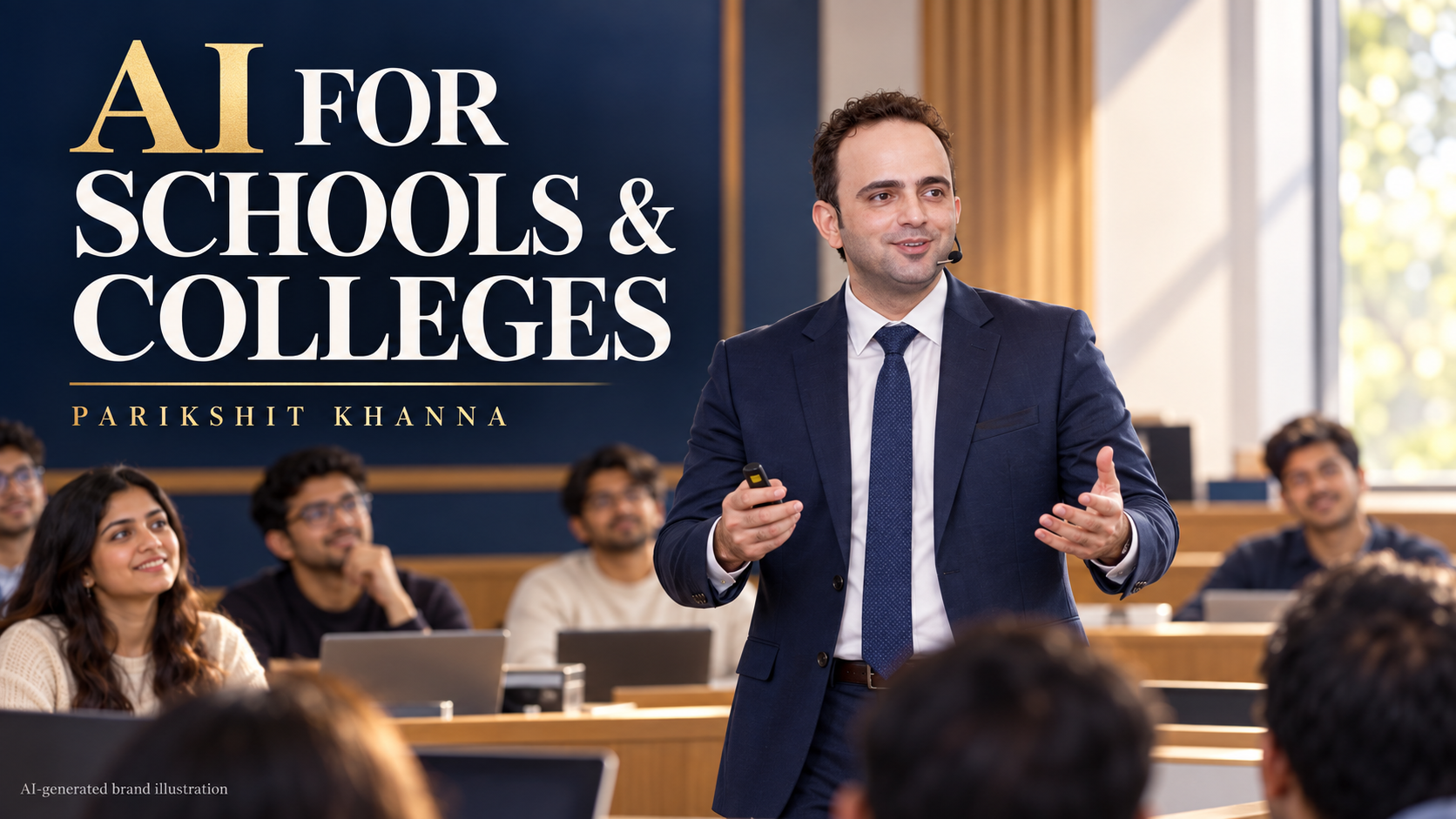
AI-generated brand illustration using Parikshit Khanna’s official photographs as face references. The setting is conceptual.
CONTENT AND COVER REFRESH • 7 OCTOBER 2026
Cover: AI-edited editorial illustration featuring Parikshit Khanna. The scene is conceptual and does not document an actual event, clinical consultation, hotel stay or design project.
Useful AI education gives learners a task they can complete, explain and verify. Start with an age-appropriate or discipline-specific objective, approved tools and clear rules for academic integrity. Learners should leave with reviewed work and a repeatable method, not only a certificate of attendance.
Prices, fees, warranties, service locations and provider credentials can change. Where older figures or promotional claims appear below, treat them as historical context rather than a current verified offer; obtain written confirmation from the named provider before deciding.
Artificial Intelligence is reshaping not just industries - but education itself. From research and curriculum design to student engagement and evaluation, AI tools are transforming how professors teach and manage academic responsibilities.
An AI Workshop for College Professors equips educators with practical, ethical, and productivity-focused AI skills. Leading these high-impact workshops is Parikshit Khanna, a recognized AI trainer known for delivering implementation-driven training across universities and corporate institutions.
Why College Professors Must Learn AI
Today’s students are already using AI tools. Professors who understand AI can:
✔ Design smarter assignments✔ Detect and manage AI-assisted submissions✔ Enhance research productivity✔ Create engaging teaching materials✔ Automate repetitive academic tasks✔ Improve curriculum relevance
AI is not replacing educators - it is empowering modern teaching methods.
A practical comparison before your next step
Focus | Practical action | What to verify |
Audience and baseline | Identify students, faculty, researchers or administrative teams. | Match examples to the course and existing skills. |
Approved access | Agree accounts, devices, subscriptions and data boundaries. | Check age requirements and institutional policy before use. |
Practical task | Choose a source-based brief, lesson plan, research comparison or project explanation. | Keep the source material with the output. |
Verification | Check quotations, references, numbers and important omissions. | Require the learner to explain the result independently. |
Assessment and follow-up | Define permitted AI assistance and a review activity. | AI training does not guarantee marks, admission or placement. |
Questions to resolve in writing
Use the checklist alongside the specific options and context in this article. Record the provider or organiser, the precise service or programme, the date of the information, the responsible contact and the questions still unanswered. This makes comparisons easier to review and helps avoid relying on a broad promotional claim.
Frequently asked questions
Do beginners need coding skills?
Many introductory writing, research and planning exercises do not require coding. Technical or automation modules should be specified separately.
How should AI use be handled in assignments?
Follow the institution’s rules, disclose assistance where required, verify sources and retain responsibility for the submitted work.
What should the institution send before a workshop?
Share the audience, objectives, duration, approved platforms, device access, sample tasks and assessment requirements.
Plan practical learning and responsible assessment
A school or college AI workshop should connect supervised practice to a clear learning objective. Choose age-appropriate, institution-approved tools and synthetic examples. For faculty, practise a lesson plan, feedback draft or research-reading summary; for students, require them to explain and verify their work. UNESCO’s AI competency framework for teachers places human agency, ethics and pedagogy alongside technical skills.
Decision or task | Useful evidence or output | Review before use |
|---|---|---|
Define a learning task | One lesson, feedback draft or project outline | Teacher checks subject accuracy and learning objectives. |
Set an assessment rule | Student explanation, source checks and declared AI assistance | Require demonstrated understanding rather than copied output. |
Plan safe practice | Approved accounts and synthetic or anonymised inputs | Institution checks age, privacy, consent and access requirements. |
Is an AI workshop a degree or academic accreditation?
A short skills workshop supports practice and professional development. Its attendance or completion certificate should not be presented as an academic degree or external accreditation.
What should a college send before booking?
Share audience level, department, learning goals, group size, available tools, preferred format and dates. Confirm scope, deliverables and assessment with the trainer.
About Parikshit Khanna
Parikshit Khanna is an AI trainer and corporate speaker. He reports a cumulative training reach of 3,50,000+ professionals across direct sessions and Digital Training Jet network programmes. He helps individuals, educators and business teams build practical AI skills through workshops and coaching. Training scope, delivery, availability and fees are agreed directly.
Courses and coaching
For a team or college programme, send the audience, objective, location or online format, proposed date and preferred duration. Check the current booking page for service details and availability.
Editorial method: AI assisted the drafting, formatting and cover creation. The cover is an AI-edited editorial illustration based on Parikshit's brand references. It does not document a real venue, product test, client project or training event. Commercial listings are research starting points; verify current credentials, terms and availability directly. Any paid promotion must be identified separately.
Current short coaching options
Parikshit Khanna’s current booking pages list a 60-minute one-to-one AI coaching session for workplace tasks and a 90-minute Claude AI Mastery session. Choose a focused objective, confirm the tools available in your account and check current fees, availability and inclusions on the booking page. Corporate and college workshops are scoped separately by enquiry.


