AI Training for Doctors and Pharma Teams with an Oncology Focus

Updated: Nov 16
Quick answer
Updated 20 October 2026. For healthcare and pharma teams, Parikshit Khanna runs hands-on ChatGPT, Claude, Microsoft 365 Copilot and Gemini training for non-clinical work, onsite across India or live online. Patient data never goes into unapproved tools, and clinical decisions always stay with qualified clinicians. See the full programme page: AI training for healthcare and pharma teams. Trainer-reported reach: 3,50,000+ professionals since 2020.
Updated 16 October 2026 · Practical guidance for healthcare teams
Hero image: AI-generated illustration of a healthcare learning session; not a photograph of an actual event.
If you work in oncology, clear information and careful review matter at every stage of a document's journey. A doctor, a nurse educator, a medical affairs colleague, and an administrator may all read the same material for different reasons. This guide proposes a workshop with Parikshit Khanna focused on education and administrative drafting around an oncology audience. The exercises can use fictional materials and approved public sources, with the responsible specialist checking anything that may later support patient communication. You can practise organising a briefing, preserving uncertainty, and making a handover easier to follow. This is a learning proposal, not an oncology credential, a clinical system, or evidence that an AI assistant can make treatment decisions.
Update, 24 October 2026: what is new in AI for healthcare
Doctors are already using AI: the American Medical Association's 2026 survey of nearly 1,700 physicians, published on 12 March 2026, found 81% use AI professionally, most often to summarise research, draft care plans and notes, and document visits. 86% said data privacy is critical, and 88% worry about losing clinical skills. AMA
India is building a health AI ecosystem: IndiaAI and ICMR signed an agreement, reported on 9 May 2026, to share anonymised, ethics-approved health datasets and AI tools through AIKosh and give ICMR subsidised GPU computing. Drishti IAS
Data protection deadlines are close: the DPDP Rules were notified on 13 November 2025. Consent manager provisions follow in November 2026 and most obligations for hospitals and clinics, including consent, notice, security and breach reporting, apply from May 2027. Taxmann
Global guidance still applies: WHO's guidance on large multimodal models warns that AI answers can be false, incomplete or biased and calls for human oversight in health use. WHO
What this means for your team: train staff to use approved tools on fictional or de-identified examples, keep a qualified person responsible for every output, and write down your data rules before May 2027.

Start here
You do not need a technical background. Choose one small task, use fictional or approved public information, and check the result yourself. This guide covers a practical example, tool costs, and how guided training can help.
Keep oncology learning and administration within a clear scope
For an education exercise, use a public or approved source selected by an oncology specialist. Ask AI to make an internal outline and list terms that need explanation. Review the source alongside the draft. Do not let a shorter version silently turn a conditional statement into a recommendation or remove an important limitation.
For an administration exercise, choose a fictional teaching meeting or staff orientation task. Ask the assistant to separate confirmed arrangements, missing information, and actions for each role. Keep patient cases, treatment regimens, dosage calculations, staging decisions, and investigation interpretation outside this introductory practice. The task should be understandable without disclosing personal health information.
Parikshit Khanna's proposed session can help different roles practise a careful handover and a readable first draft. An oncology professional should determine whether any real educational adaptation is appropriate. Relevant training experience can be checked through dated portfolio evidence; no teaching claim should be treated as clinical accreditation or a guarantee of patient outcomes.
When enquiring about an oncology-focused session, specify the roles attending and the educational or administrative task. Agree a specialist reviewer, permitted sources, practice accounts, and clear boundaries before confirming the workshop.
Organise a fictional oncology education meeting
Invent an internal education meeting with a public reading link, two discussion topics, a date, and a question about who will review the slides.
Ask AI for a meeting brief that separates arrangements, reading, discussion questions, and unresolved responsibilities without adding clinical claims.
Check the brief against the supplied notes and assign a fictional specialist reviewer before any educational content could be shared.
Check that the draft preserves source limitations and keeps unresolved responsibilities visible. Have the appropriate oncology specialist review real educational material. Do not use an introductory assistant exercise to select treatment, calculate doses, stage cancer, interpret investigations, or direct an individual patient's care.
AI and generative AI, in ordinary words
AI is the broad name for computer tools that help with tasks such as finding patterns, sorting information or making predictions. Generative AI is one kind that creates a draft of text, images or other content from an instruction. That instruction is often called a prompt. A workflow simply means the steps used to complete a task. A fluent answer can still contain mistakes.
A useful instruction says what you want, who will read it, which approved facts to use, and what must stay unchanged. For example: “Rewrite this fictional clinic notice in friendly, short sentences. Keep every date unchanged. Do not add medical advice. Flag anything unclear.”
What are Claude, ChatGPT and Microsoft Copilot?
Claude is Anthropic’s AI assistant. You can ask it to draft, simplify or organise information, then review its work.
ChatGPT is OpenAI’s AI assistant. Use the same careful approach: give clear instructions, check sources, and review the draft.
Microsoft Copilot is a family of AI assistants. Personal Copilot and workplace Copilot have different access and controls. Ask IT which work account and licence your organisation has approved. Dragon Copilot is a separate healthcare product; ordinary Copilot is not a clinical system.
Free or paid: what should you choose?
Start with a free option and fictional examples. Pay only when a specific limit or feature is stopping useful work. A personal paid subscription does not automatically permit patient information. Check account controls, organisational approval and total cost before buying.
Claude reference prices checked 16 October 2026: Free is US$0 with limits; Pro is US$20 a month or US$200 billed yearly. Team Standard is US$20 per person per month billed yearly, or US$25 monthly, for 2 to 150 people. Taxes and local checkout terms may differ. More expensive plans are available; beginners do not need to start there.
Microsoft Copilot has a free personal version. Copilot Chat is included with eligible Microsoft 365 work plans; some agents can add usage charges. The India business page lists a first-year offer for existing eligible Microsoft 365 Business customers: ₹1,495.73 per user per month paid yearly, versus regular ₹1,745. An annual commitment is required. The qualifying base licence costs extra, and GST is extra. The offer runs 1 July, 31 December 2026. Confirm renewal terms before buying.
ChatGPT has free and paid plans. Check the official plan information and your local checkout before paying; features and limits can change. Tool subscriptions are separate from workshop fees.

Draft with AI. Check it yourself. Share only after approval.
Protect patient information and keep a person responsible
For practice, leave out real names, reports, prescriptions, phone numbers, appointment lists and other identifying details. Use invented information. Before any patient information is used, your organisation should approve the tool, account, contracts, settings and workflow. Removing a name alone may not remove every identifying detail.
WHO warns that generated answers may be false, incomplete or biased. Read the original source, check dates and numbers, and have the appropriate professional approve the final text. General chatbots should not make diagnosis, treatment, dosage, triage or urgent-care decisions.
Follow AI news without feeling left behind
You do not need every new model or subscription. Pick one useful task and practise it for a week. Set aside a short weekly news-reading slot. For each announcement, ask: Is it available here? Is our organisation allowed to use it? Does it solve a task we actually have?
Two developments worth understanding: Anthropic announced Claude for Healthcare on 11 January 2026; Microsoft described Dragon Copilot expansion on 5 March 2026. These are vendor announcements with market, licence and feature limits, not proof that a general chatbot can deliver better patient outcomes.
Parikshit Khanna's healthcare and pharma training experience
AI for Doctors programme: a four-session programme for a senior neurologist and his team, running September to October 2026, covering prompt engineering, Claude and ChatGPT for clinical paperwork such as discharge summaries, research with Gemini Gems and Claude Projects, and patient education. All practice uses synthetic patient examples.
One-to-one coaching: a paid online one-to-one AI session for a critical care doctor in Hyderabad, February 2026.
Hospital programme: a one-day onsite Generative AI programme for Sushrut Hospital, Mumbai, on Thursday 15 October 2026, delivered through Digital Training Jet by partner trainer Rushabh Mehta.
Pharma: AI training for Hetero, a pharmaceutical company.
Credentials: TEDx speaker (Redesigning Work with Artificial Intelligence, August 2026), Anthropic Claude Academy badges, visiting faculty at GL Bajaj, and a trainer-reported reach of 3,50,000+ professionals since 2020. Watch the TEDx talk
Parikshit is an AI trainer, not a medical professional. Sessions teach safe, practical use of AI tools; clinical decisions stay with qualified clinicians.
How Parikshit Khanna’s training can help
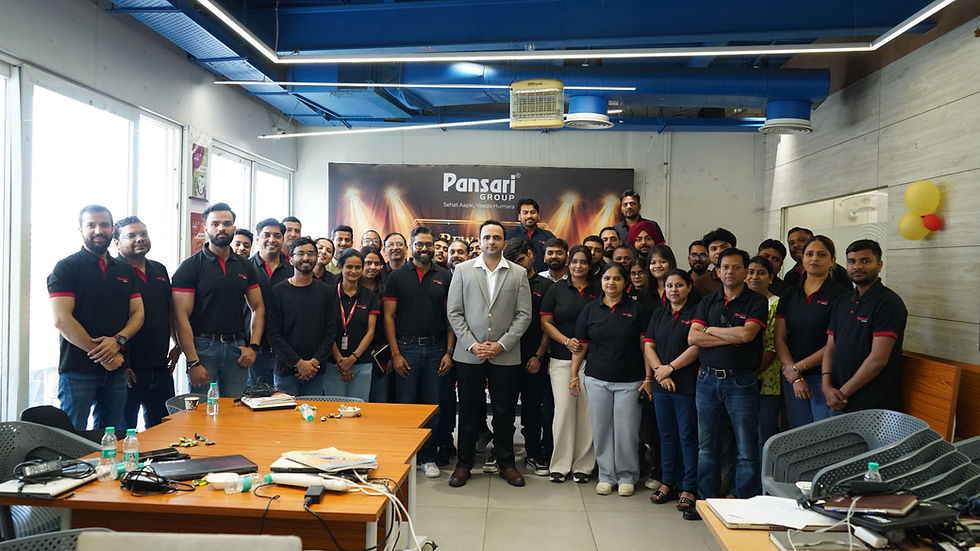
Parikshit Khanna is an AI trainer and Founder of Digital Training Jet. A guided session gives your team time to practise clear instructions, spot mistakes, check sources and agree who approves the final work. Ask for examples based on your department’s everyday tasks and time for beginner questions.
Parikshit's recent healthcare work includes a four-session AI for Doctors programme for a senior neurologist, a one-to-one session for a critical care doctor, and pharma and hospital programmes. Details are in the experience section above.
Plan a session around your team’s work
Share your team’s roles, group size, preferred language, two or three repetitive tasks, approved tools and possible dates. Ask for a proposal covering practice time, take-home examples, review responsibilities and follow-up support. Workshop fees, delivery format and travel are confirmed in the proposal. Results should be measured in your own setting.
Common questions
How many doctors use AI now?
In the AMA's 2026 survey, 81% of US physicians said they use AI professionally, more than double the 2023 figure. Most use it for summaries, notes and documentation rather than diagnosis.
What does the DPDP law mean for hospitals using AI tools?
Most obligations under India's DPDP Rules apply from May 2027. Hospitals should decide which AI tools are approved, never paste identifiable patient data into public chatbots, and record consent and security steps.
Is Parikshit Khanna a doctor?
No. He is a corporate AI trainer. His sessions teach safe use of AI tools for healthcare teams, and clinical judgement always stays with qualified professionals.
Do I need coding skills? No. Begin with a clearly described task and a short draft you can check.
Will AI replace professional judgement? Your team remains responsible for the final output. Training focuses on careful use and review.
Should everyone buy a paid account? Start with the tools your organisation already approves. Buy additional access only for a demonstrated need.
From Parikshit Khanna's training sessions


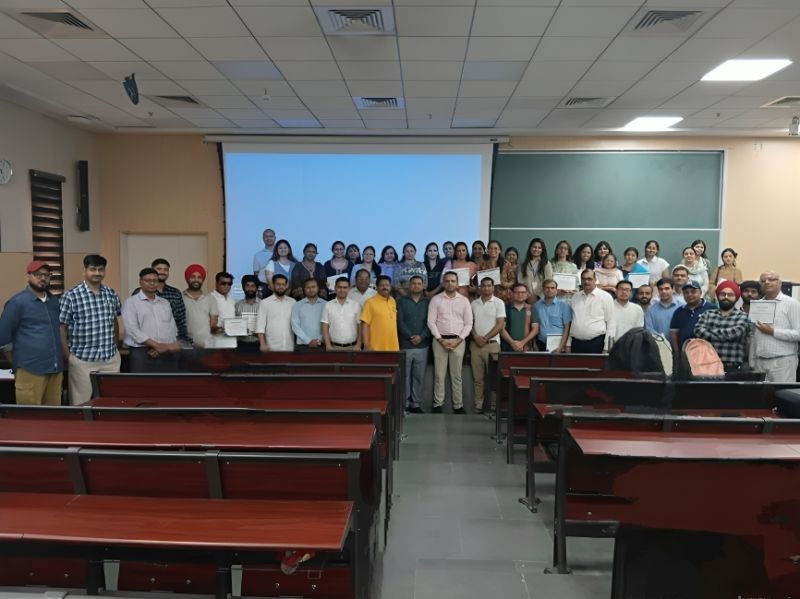
These are real photographs from Parikshit's training sessions; captions name the session where it is known.
Book healthcare and pharma AI training: contact Parikshit Khanna
Send your organisation name, roles, headcount, location, approved AI tools, preferred dates and two priority tasks. You will get a written proposal with scope, dates and fees. Please share anonymised examples only.
Channel | Details |
|---|---|
Business email | |
Personal email | |
Phone | +91 99972 13177 | +91 80762 50669 |
Proposal request | |
Private sessions |
Training by tool
Related programmes
Medical disclaimer: this article is general information about training and AI tools, not medical advice. Follow your institution's policies and the law on patient data.
Last reviewed on Saturday 24 October 2026 by Parikshit Khanna, corporate AI trainer.
Want your name on this page? Collaborate with Parikshit Khanna
Doctors, clinics, hospitals and healthcare brands can showcase their name on parikshitkhanna.com and digitaltrainingjet.com through a collaboration with Parikshit Khanna. Send your name, city, website and what you offer, and you will get the options in writing. Paid collaborations are labelled as sponsored, and any health, legal or results claim needs proof before it is published.