ChatGPT for UAE Marketers: Campaign Briefs, Localisation and Review

Updated: Oct 9
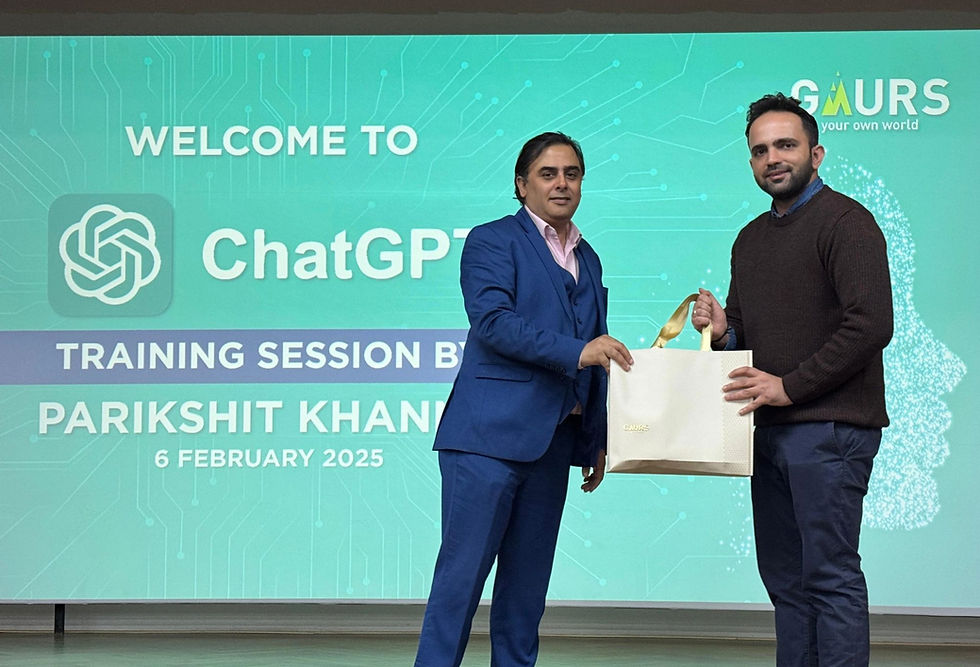
ChatGPT can help UAE marketers organise campaign research, turn approved facts into content variants and prepare a localisation brief. A useful workflow keeps brand claims, offer terms and language approval visible throughout the process. Parikshit Khanna's marketing training through Digital Training Jet uses fictional Dubai and UAE scenarios to teach these skills without presenting generated drafts as proven advertising results.
For a Dubai campaign, start with a defined audience need, channel, approved offer and review owner. Do not assume that nationality alone determines a customer's interests. Use actual permitted audience evidence, a clear campaign objective and a documented brand voice. AI can generate alternatives; marketers decide which alternatives are appropriate and test them with a valid method.
Build a maintained campaign fact sheet
Create one source document containing product facts, offer dates, exclusions, contact information and approved claims. Keep a version number and owner. This reduces the chance that different prompts create inconsistent details across a landing page, email and social post. If information is unavailable, mark it for review rather than invent a persuasive statement.
Marketing task | ChatGPT draft | Approval check |
Campaign planning | Brief with audience, message and channel | Objective and evidence |
Content variants | Alternative headlines and captions | Claims, tone and offer terms |
Bilingual preparation | English draft and localisation notes | Meaning and qualified language review |
Research organisation | Source register and summary | Source quality, dates and relevance |
Results commentary | Report from a fictional dataset | Definitions, totals and inference limits |

Dubai campaign lab: invented hospitality offer
Use a fictional hotel campaign brief with supplied room features, travel dates, an offer code and exclusions. Learners draft a landing-page section, an email and three social captions. Include one missing meal detail in the brief. The exercise tests whether the output asks for clarification rather than advertising a meal that was never included.
Create a campaign pack for this fictional Dubai hospitality brief: one landing-page introduction, a 150-word email and three social captions. Use only the supplied offer facts. Preserve dates, inclusions and exclusions. Do not invent a lake view, free transfer, award, guest review or discount. Add an approval checklist and flag the missing meal information.
The reviewer checks every claim against the fact sheet and tests the call to action. A draft that sounds luxurious but invents a property feature fails the task. Learners then change the offer dates and regenerate the pack. They record stale details and corrections so the team can see how well its instruction handles updates.

Localisation needs more than translation
Supply a terminology list, the intended audience, channel and tone. Ask for an English draft plus notes for an Arabic reviewer, or a bilingual draft where the organisation approves that use. The language reviewer checks meaning and nuance. Names, monetary values and offer conditions should match in both versions.
Avoid prompts that stereotype Emirati, South Asian or Western customers. A campaign can address different needs such as a business trip, family visit or conference attendance using evidence from the brief. Cultural context should improve clarity and respect, not substitute for genuine audience research or reduce people to assumed preferences.
Use ChatGPT for research organisation
Marketers can ask for a structured evidence register instead of an unqualified competitor summary. Each entry should show source, date, relevant fact, limitation and what still needs checking. ChatGPT search can surface links, but the researcher opens them before publishing a claim.
For competitor work, compare publicly stated offers, topics and formats without inventing revenue, client results or weaknesses. Do not copy their copy, graphics or course materials. An evidence-led content brief identifies questions your audience needs answered and proposes original examples that your team can substantiate.
SEO, AEO and GEO content practice
For a training article or service guide, write a direct answer near the beginning, useful explanations, clear headings and concise FAQs. Use original expertise and examples. Keep important facts in ordinary page text so a reader does not need an infographic to understand the service. Link to relevant source material and related guides where those links help the reader.
An AI-generated infographic can illustrate a learning framework, but it should not contain invented statistics or fabricated testimonials. Use a descriptive filename, accurate alternative text and a caption explaining the lesson. The visible article should contain the same essential information. These are good publishing practices; they do not establish a guaranteed search position or AI citation.
Reporting lab: separate results from causes
Provide an invented campaign dataset with spend, impressions, clicks and enquiries. Ask learners to calculate the metrics using supplied definitions, reconcile totals and identify unusual rows. Commentary should distinguish an observed pattern from an explanation. A lower enquiry count does not by itself prove that a headline caused the change.
Learners prepare a test plan with the hypothesis, metric, comparison period and review owner. If the brief lacks enough information for a causal claim, the result should say so. The workshop can teach a disciplined testing workflow without promising improved return on ad spend or a fixed conversion uplift.
Approve the workflow before scaling it
Use approved or fictional inputs in training. Agree the permitted account, data categories and reviewer before applying the method to real customer or campaign data. A short pilot compares output completeness, claim accuracy and correction effort with the current process. Keep a small library of maintained prompts and source fact sheets rather than generating large volumes of unreviewed material.
Frequently asked questions
Can ChatGPT create Arabic and English marketing content?
It can assist with bilingual drafts and localisation preparation. A qualified reviewer should approve meaning, terminology and offer details before publication.
Will ChatGPT improve my campaign ROI?
It can support planning and drafting, but results depend on the offer, audience, channel and execution. Use a valid test rather than assume an uplift.
Can this be tailored for a Dubai marketing team?
Yes. Share the industry, campaign tasks, approved tools and existing review process to scope a practical marketing lab.
Plan your training with Parikshit Khanna
Parikshit Khanna is the founder of Digital Training Jet and a corporate AI trainer based in Delhi NCR. His UAE-related experience includes online training for Malabar Group finance teams. Share your department, participant count, approved tools, preferred dates and two tasks you want to improve. Live online delivery can connect UAE teams; an onsite proposal depends on availability, travel and agreed arrangements. The quotation confirms scope, licences, follow-up and commercial terms.
parikshitkhanna@digitaltrainingjet.com | WhatsApp +91 99972 13177 | View current private coaching availability.
Related learning guides
Editorial note: AI assisted research organisation and drafting. Practice scenarios are fictional and do not report client results. Product access can change; confirm account and workspace capabilities before the session. A qualified reviewer approves real workplace outputs.