
Clinic Reminders and Billing Messages in Gujarat: A Careful Automation Plan

Updated: Oct 20
Quick answer
Updated 20 October 2026. For AI training in Gujarat, Parikshit Khanna runs hands-on ChatGPT, Claude, Microsoft 365 Copilot and Gemini sessions at your office in one or two day blocks, or live online, with a written proposal before booking. Recent Gujarat clients include INOX India (INOXCVA) and Sudeep Pharma in Vadodara. See the full programme page: Corporate AI training in Gujarat. Trainer-reported reach: 3,50,000+ professionals since 2020.
Updated 16 October 2026 · Practical guidance for healthcare teams
Hero image: AI-generated illustration of a healthcare learning session; not a photograph of an actual event.
If you run a clinic in Gujarat, you may be exploring appointment reminders, payment messages, or a clearer way to tell someone that a report is ready. It helps to separate routine automation from AI before buying a service. A fixed reminder can follow a simple rule; it may not need a chatbot to write a fresh message each time. This guide proposes a practical learning exercise with Parikshit Khanna using fictional appointments and a test inbox. You can map the steps, check the wording, and decide where a staff member must approve or intervene. The aim is to understand the process before connecting real systems or sending messages to patients, with costs and responsibilities agreed in writing.
Start here
You do not need a technical background. Choose one small task, use fictional or approved public information, and check the result yourself. This guide covers a practical example, tool costs, and how guided training can help.
Map the message journey before connecting tools
Start with a paper map: what event begins the process, which approved message is selected, who checks the recipient, and what happens if the appointment changes. A fixed template may be enough. Use AI only where a clear task requires it, such as helping staff review the wording of a fictional template.
Keep appointment information, billing information, and report delivery as distinct workflows. A message saying that a report is available is different from sending the report or interpreting it. The clinic should choose an approved access route, confirm the recipient, and define how staff handle failures, replies, cancellations, and requests to stop messages.
In a proposed session, Parikshit Khanna can help participants test the steps without real contact details. Include duplicate records, a changed date, and a failed delivery. Ask suppliers for an itemised scope covering setup, subscriptions, support, and ownership. No starter price or revenue improvement should be assumed from a general article.
For Gujarat clinics, choose the languages patients actually understand and review each template with a fluent colleague. Confirm the messaging service, permissions, operating costs, staff ownership, and support arrangements before implementation.
Test a fictional reminder flow without sending to patients
Create five invented appointments with test labels instead of real phone numbers. Include a cancellation, a duplicate, and a rescheduled visit.
On paper or in an approved test environment, select which message would be prepared for each record and identify who would approve it.
Simulate a failed delivery and an opt-out. Check that the flow pauses correctly and produces a staff task rather than repeated messages.
Check the intended recipient, current appointment status, approved wording, and stop-message process. Test failures and duplicates before real use. Report access must follow the clinic's approved process; a general-purpose assistant should not interpret or distribute private laboratory results through an unreviewed flow.
AI and generative AI, in ordinary words
AI is the broad name for computer tools that help with tasks such as finding patterns, sorting information or making predictions. Generative AI is one kind that creates a draft of text, images or other content from an instruction. That instruction is often called a prompt. A workflow simply means the steps used to complete a task. A fluent answer can still contain mistakes.
A useful instruction says what you want, who will read it, which approved facts to use, and what must stay unchanged. For example: “Rewrite this fictional clinic notice in friendly, short sentences. Keep every date unchanged. Do not add medical advice. Flag anything unclear.”
What are Claude, ChatGPT and Microsoft Copilot?
Claude is Anthropic’s AI assistant. You can ask it to draft, simplify or organise information, then review its work.
ChatGPT is OpenAI’s AI assistant. Use the same careful approach: give clear instructions, check sources, and review the draft.
Microsoft Copilot is a family of AI assistants. Personal Copilot and workplace Copilot have different access and controls. Ask IT which work account and licence your organisation has approved. Dragon Copilot is a separate healthcare product; ordinary Copilot is not a clinical system.
Free or paid: what should you choose?
Start with a free option and fictional examples. Pay only when a specific limit or feature is stopping useful work. A personal paid subscription does not automatically permit patient information. Check account controls, organisational approval and total cost before buying.
Claude reference prices checked 16 October 2026: Free is US$0 with limits; Pro is US$20 a month or US$200 billed yearly. Team Standard is US$20 per person per month billed yearly, or US$25 monthly, for 2–150 people. Taxes and local checkout terms may differ. More expensive plans are available; beginners do not need to start there.
Microsoft Copilot has a free personal version. Copilot Chat is included with eligible Microsoft 365 work plans; some agents can add usage charges. The India business page lists a first-year offer for existing eligible Microsoft 365 Business customers: ₹1,495.73 per user per month paid yearly, versus regular ₹1,745. An annual commitment is required. The qualifying base licence costs extra, and GST is extra. The offer runs 1 July–31 December 2026. Confirm renewal terms before buying.
ChatGPT has free and paid plans. Check the official plan information and your local checkout before paying; features and limits can change. Tool subscriptions are separate from workshop fees.

Draft with AI. Check it yourself. Share only after approval.
Protect patient information and keep a person responsible
For practice, leave out real names, reports, prescriptions, phone numbers, appointment lists and other identifying details. Use invented information. Before any patient information is used, your organisation should approve the tool, account, contracts, settings and workflow. Removing a name alone may not remove every identifying detail.
WHO warns that generated answers may be false, incomplete or biased. Read the original source, check dates and numbers, and have the appropriate professional approve the final text. General chatbots should not make diagnosis, treatment, dosage, triage or urgent-care decisions.
Follow AI news without feeling left behind
You do not need every new model or subscription. Pick one useful task and practise it for a week. Set aside a short weekly news-reading slot. For each announcement, ask: Is it available here? Is our organisation allowed to use it? Does it solve a task we actually have?
Two developments worth understanding: Anthropic announced Claude for Healthcare on 11 January 2026; Microsoft described Dragon Copilot expansion on 5 March 2026. These are vendor announcements with market, licence and feature limits, not proof that a general chatbot can deliver better patient outcomes.
How Parikshit Khanna’s training can help
Parikshit Khanna is an AI trainer and Founder of Digital Training Jet. A guided session gives your team time to practise clear instructions, spot mistakes, check sources and agree who approves the final work. Ask for examples based on your department’s everyday tasks and time for beginner questions.
A participant account published by OncoDaily describes learning from Parikshit at a ChatGPT and AI tools workshop for healthcare professionals held at IIT Delhi. This describes a workshop experience; it does not claim institutional endorsement or clinical certification.
Plan a session around your team’s work
Share your team’s roles, group size, preferred language, two or three repetitive tasks, approved tools and possible dates. Ask for a proposal covering practice time, take-home examples, review responsibilities and follow-up support. Workshop fees, delivery format and travel are confirmed in the proposal. Results should be measured in your own setting.
Common questions
Do I need coding skills? No. Begin with a clearly described task and a short draft you can check.
Will AI replace professional judgement? Your team remains responsible for the final output. Training focuses on careful use and review.
Should everyone buy a paid account? Start with the tools your organisation already approves. Buy additional access only for a demonstrated need.
Why Gujarat teams are training in AI now
Gujarat's five-year AI action plan, approved by Chief Minister Bhupendra Patel in July 2025, aims to train 2.5 lakh students, MSME staff and government officials by 2030. Teams that learn to use AI safely now will be ready as customers and suppliers adopt it. Source: Storyboard18
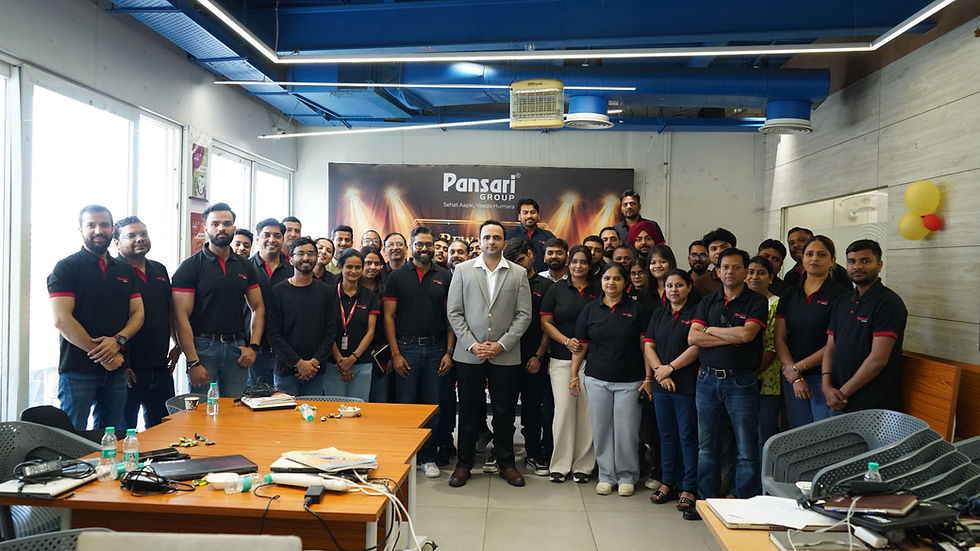
Bring this to your team: share your team size, departments and approved AI tools, and get a written agenda, dates and one clear fee for an onsite Gujarat session or a live online programme.
Book AI training in Gujarat: contact Parikshit Khanna
Send your company name, departments, headcount, office location, approved AI tools, preferred dates and two priority tasks. You will get a written proposal with scope, dates and fees.
Channel | Details |
|---|---|
Business email | |
Personal email | |
Phone | +91 99972 13177 | +91 80762 50669 |
Proposal request | |
Private sessions |


