Generative AI for Global Manufacturing Companies in 2026

Generative AI for Global Manufacturing Companies in 2026: Faster Product Launches, Export Growth, Secure Copilots and AI-Enabled Operations
By Parikshit Khanna | TEDx Speaker | Enterprise AI Trainer | Founder, Digital Training Jet
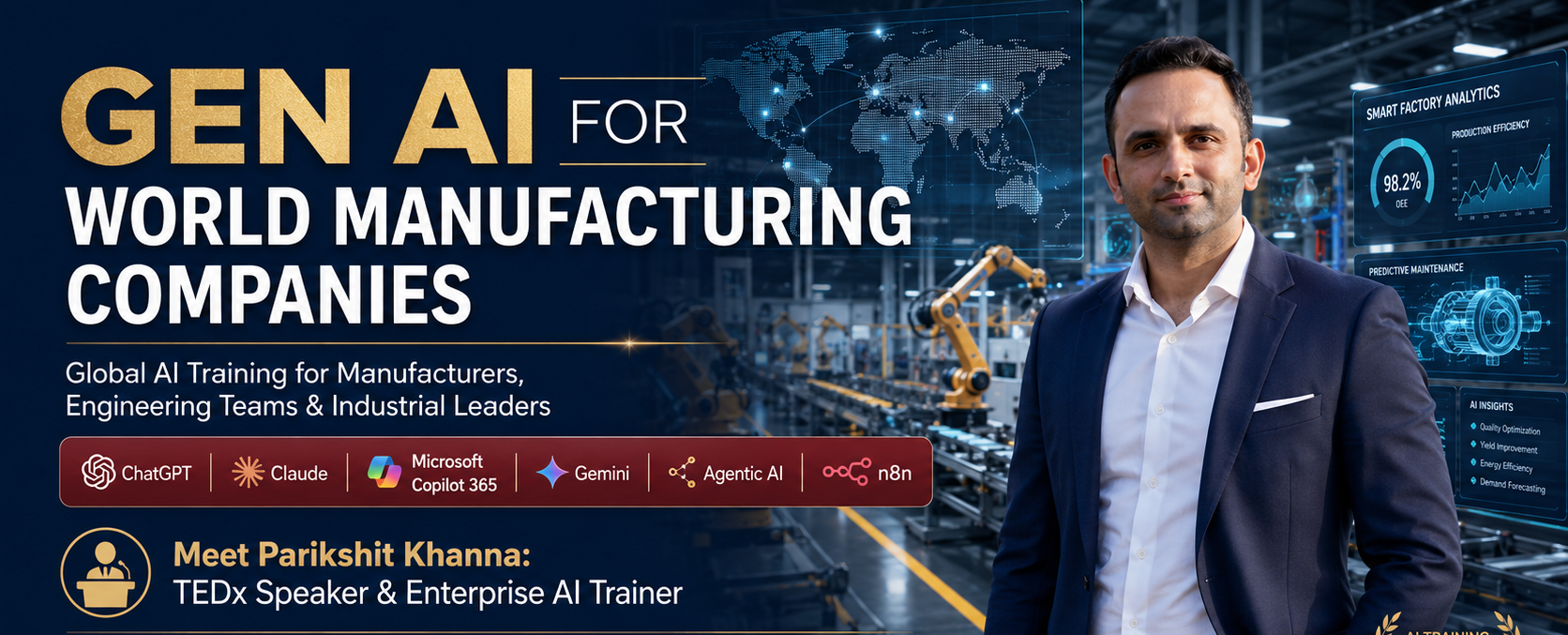
Manufacturing has reached a stage where Generative AI is no longer a side experiment for an innovation team.
It is becoming a practical capability across engineering knowledge, technical documentation, product development, production reporting, quality, procurement, finance, HR, sales, exports, CRM, customer service and executive decision-making.
The winning question is no longer:
“Can a manufacturing company use AI?”
It is:
“Where can AI reduce cycle time, improve commercial responsiveness and make knowledge easier to use without weakening quality, security or accountability?”
That distinction matters.
Leading manufacturing research increasingly frames GenAI as an augmentation layer across planning, manufacturing, supply chain, workforce knowledge, product development and customer experience rather than simply another chatbot. Deloitte, McKinsey and PwC have all highlighted the movement from experimentation toward operational adoption and higher-value industrial use cases.
For CEOs, COOs, CIOs, CTOs, plant heads, operations leaders, engineering teams, HR and L&D, finance, procurement, quality, marketing, export managers and sales leaders, the capability gap is therefore changing.
Employees need to learn not only how to prompt AI, but how to:
choose the right model for the right task;
protect proprietary information;
ground answers in approved company knowledge;
validate AI-generated work;
automate repeatable processes safely;
connect AI with CRM, documents and workflows;
and measure whether AI is generating business value.
That is where practical enterprise AI training becomes strategically important.
AI Is No Longer Optional for Global Manufacturing
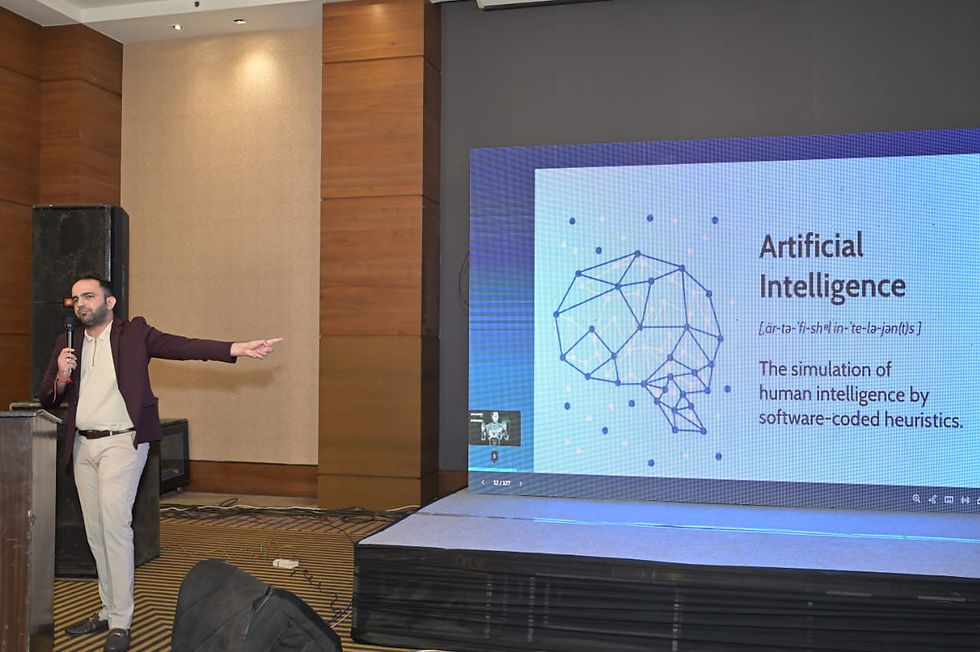
AI should not be adopted because it is fashionable.
It should be adopted when it can improve measurable business processes.
For manufacturers, those processes frequently involve:
Speed. How quickly can a team move from market insight to concept, documentation, approval and launch?
Knowledge. Can an engineer or operator find the correct information without searching across dozens of manuals, emails and folders?
Commercial responsiveness. Can an export or sales team respond to a qualified opportunity in hours rather than days?
Consistency. Can reports, SOPs, RFQs, meeting notes and customer responses follow a reliable standard?
Decision preparation. Can management receive structured insights instead of unprocessed information?
Workforce capability. Can employees use AI without exposing intellectual property or blindly trusting hallucinated answers?
GenAI becomes valuable when it reduces friction around these questions.
12 High-Value Generative AI Use Cases for Manufacturing Companies

1. Market Trend Synthesis
Accelerating time-to-market begins before production.
An approved enterprise AI system can help synthesize:
industry reports;
consumer behaviour;
competitor activity;
customer feedback;
sales intelligence;
market-entry considerations;
emerging product requirements;
and internal strategic information.
Microsoft 365 Copilot, ChatGPT Enterprise, Claude or another approved enterprise tool can turn those inputs into a structured market-entry or product-opportunity brief.
The output should identify its sources, assumptions, unanswered questions and potential risks rather than presenting generated information as established fact.
2. Product Development and Engineering Knowledge
Engineering organizations generate enormous quantities of information:
specifications;
design notes;
testing observations;
product requirements;
meeting discussions;
change requests;
service history;
engineering standards;
and lessons from earlier projects.
GenAI can help teams summarize that information, compare approved documents, structure questions and create first drafts.
The engineer remains responsible for engineering decisions.
AI accelerates knowledge work; it does not become the accountable design authority.
3. Technical Documentation
Technical documentation is an ideal GenAI-assisted workflow because much of the work involves converting expertise into a consistent structure.
AI can help engineers and product teams convert approved:
technical specifications;
product characteristics;
code explanations;
architectural notes;
installation information;
approved troubleshooting guidance;
service knowledge;
and engineering notes
into first drafts of:
user manuals;
product documentation;
service documents;
work instructions;
installation guides;
training material;
technical FAQs;
and internal knowledge articles.
Every technical specification and safety statement still requires qualified human validation.
4. Production and Shift Reporting
Production teams can use GenAI to transform structured shift information into:
daily production summaries;
target-versus-actual narratives;
downtime reports;
escalation notes;
management summaries;
unresolved-action lists;
and shift handover documentation.
The AI should work from approved plant data.
It should never be asked to invent a missing production figure.
5. Quality, RCA and CAPA Support
GenAI can help quality teams organize known evidence into:
Root Cause Analysis drafts;
CAPA structures;
audit summaries;
deviation narratives;
inspection checklists;
issue chronologies;
supplier-quality communication;
and management summaries.
A critical governance principle applies:
AI may structure the evidence. It should not approve the quality decision.
6. Maintenance Knowledge
Manufacturing knowledge is frequently trapped in manuals, service tickets, technician notes and experienced employees' memories.
A governed AI assistant can make approved maintenance knowledge easier to retrieve and explain.
Employees could ask questions such as:
“Show me the approved troubleshooting steps for this alarm.”
“Summarize previous service incidents involving this component.”
“Convert this maintenance manual section into a technician checklist.”
Predictive maintenance is different. Predicting equipment failure normally requires sensor data, analytical models and operational integration beyond a general-purpose LLM.
7. Procurement and Vendor Management
AI can accelerate procurement knowledge work by helping teams:
summarize vendor proposals;
compare RFQs;
structure commercial comparisons;
identify missing information;
prepare negotiation questions;
draft vendor follow-ups;
summarize contracts for internal review;
and prepare procurement management briefs.
Confidential prices and contractual information should be handled only in approved enterprise environments.
8. Supply Chain Response
Supply-chain teams constantly process unstructured information from suppliers, transport partners, customers and internal teams.
AI can help transform those updates into:
disruption summaries;
supplier-risk briefs;
inventory questions;
action lists;
scenario summaries;
escalation communication;
and management updates.
It does not replace supply-chain planning systems.
It makes the surrounding information easier for people to understand and act upon.
9. HR, Learning and Frontline Enablement
Manufacturing AI succeeds only when people understand how to use it.
GenAI can support:
role-specific onboarding;
SOP explainers;
quizzes;
training scenarios;
multilingual communication;
employee FAQs;
learning plans;
manager coaching material;
and knowledge-assessment exercises.
The best AI workshop therefore uses real manufacturing workflows, not generic “write me an email” demonstrations.
10. Finance and Management Reporting
Finance teams supporting manufacturing operations can use GenAI to help:
explain variance drivers;
create management commentary;
structure FP&A questions;
prepare meeting briefs;
summarize financial observations;
draft business-review narratives;
and convert analysis into executive-ready communication.
Financial controls, reconciliation and source verification remain mandatory.
11. Lead Generation, Follow-up and CRM Productivity
For many manufacturers, one of the fastest visible returns from GenAI can come outside the production line.
Sales teams lose enormous time researching prospects, preparing for meetings, writing follow-ups and updating CRM systems.
A governed GenAI sales workflow can:
research an account using verified information;
summarize the company's business and likely requirements;
prepare discovery questions;
produce a one-page meeting brief;
summarize an approved meeting transcript;
extract decisions and open questions;
identify proposed next actions;
draft a personalized follow-up;
prepare a CRM note;
create a follow-up cadence;
identify neglected opportunities;
transform recurring customer objections into sales-enablement content.
This is why Lead Generation, Follow-up and CRM Productivity should be part of modern manufacturing AI training.
12. Customer Support and Help-Center Creation
Manufacturers already possess valuable knowledge inside:
support emails;
technical resolutions;
service tickets;
technician notes;
FAQs;
manuals;
warranty information;
and product training material.
GenAI can transform approved internal technical resolutions or FAQs into polished public-facing help-center drafts.
That can shorten the distance between what the organization has learned and what the customer can access.
Accelerating Time-to-Market with Generative AI
Accelerating the time-to-market for a new product requires rapid alignment between market understanding, engineering, documentation, commercial teams and customer expectations.
GenAI can compress several information-heavy stages.
Market Trend Synthesis
Copilot or another approved model can analyze supplied industry reports, customer behaviour data and competitive intelligence to draft structured market-entry briefs.
Technical Documentation
AI can convert approved technical specifications, code structures and architectural notes into structured documentation drafts.
Meeting-to-Execution
From an approved transcript, an AI assistant can extract clear action items, identify suggested owners, highlight missing due dates and draft follow-up communications.
The meeting owner should confirm responsibilities before anything becomes an official assignment.
Internal Knowledge to Customer Content
Approved internal technical solutions can be transformed into customer-facing:
help-center articles;
knowledge-base material;
FAQs;
troubleshooting guides;
onboarding material;
and localized support content.
That is a practical way to reduce product-launch friction.
How Generative AI Can Help Manufacturers Grow Internationally
AI does not guarantee export revenue.
Successful exports still depend on competitive products, certifications, pricing, relationships, distribution, market knowledge and execution.
But GenAI can make international expansion faster and more systematic.
Market Intelligence
Manufacturers can combine internal commercial information with verified external research to prioritize:
countries;
customer segments;
distributors;
industry verticals;
competitors;
and emerging demand.
Localization
AI can help adapt approved sales content for language and market context while retaining a controlled technical glossary.
Distributor and Account Research
Teams can create researched prospect lists, qualification notes and personalized meeting briefs.
Every lead should be verified before CRM entry.
RFQ and RFP Support
GenAI can:
summarize requirements;
create compliance matrices;
identify missing information;
structure a response;
generate clarification questions;
and prepare internal action lists.
Trade Shows and International Meetings
Before a meeting, AI can create the account brief.
After the meeting, it can produce the summary, actions, CRM note and first follow-up draft.
International Customer Enablement
Technical FAQs and approved service information can be transformed into multilingual customer-support material.
Follow-up Discipline
Promising export opportunities are frequently lost because follow-up lives in scattered spreadsheets and individual inboxes.
GenAI plus CRM workflows can create a much more disciplined follow-up system.
For Indian manufacturers, this matters enormously.
India has deep capability across engineering, automotive, pharmaceuticals, textiles, FMCG, industrial products and technology.
Parikshit Khanna's connection with India is indispensable to his international positioning.
India's scale, engineering depth, multilingual workforce, cost competitiveness and export ambition create a demanding environment for practical AI adoption.
The opportunity is to combine that industrial capability with the research speed, localization, communication quality and commercial discipline expected by global buyers.
The Enterprise GenAI Stack for Manufacturing in 2026
A mature enterprise AI programme should not force every employee to use exactly one model.
It should determine:
Which tools are approved?Which data may enter them?Which tool fits each task?How will output be verified?When may AI connect to another system?Who remains accountable?
Microsoft 365 Copilot
Relevant manufacturing functions include:
Word;
Excel;
PowerPoint;
Outlook;
Teams;
Copilot Chat;
meeting summaries;
document work;
management communication;
and enterprise knowledge workflows.
Microsoft's 2026 release notes state that Claude is available as a model option inside Microsoft 365 Copilot Chat, while Microsoft's roadmap also lists GPT-5.6 across Microsoft 365 Copilot experiences.
That does not mean the separate ChatGPT application is simply “inside Copilot.”
ChatGPT remains an OpenAI product.
ChatGPT Business and Enterprise
Useful areas can include:
analysis;
document work;
research;
reasoning;
internal GPTs;
Custom GPT workflows;
drafting;
structured problem solving;
and cross-functional productivity.
Claude
Claude is particularly useful for:
long-document understanding;
structured reasoning;
policy analysis;
technical documents;
complex comparison;
and multi-step knowledge work.
Gemini
Gemini can support organizations working heavily inside the Google Workspace ecosystem and other approved Google enterprise services.
n8n and Workflow Automation
n8n can connect approved systems and orchestrate:
notifications;
approvals;
CRM processes;
document workflows;
repetitive follow-ups;
data movement;
and AI-assisted workflows.
Automation should use least privilege, logging, testing and human approval.
Do not automate a weak process merely to make the weak process run faster.
Power BI
Power BI remains valuable for management dashboards, analytics and business reporting.
AI can improve the way those insights are explored and communicated, but verified source data remains the foundation.
Canva and Visual AI
Visual AI can accelerate:
internal training;
sales enablement;
presentations;
explainers;
employee communication;
and customer material.
It should never become the source of technical truth.
Data Security: The Non-Negotiable Layer
Manufacturing AI can touch:
intellectual property;
designs;
pricing;
supplier information;
customer data;
engineering specifications;
employee information;
contracts;
quality information;
and confidential corporate strategy.
Security cannot be an afterthought.
OpenAI states that data from its business offerings is not used to train its models by default, while its enterprise privacy materials describe controls including access management and encryption.
Every organization must still evaluate its individual contracts, configurations, retention requirements, jurisdiction and risk profile.

A manufacturing GenAI programme should establish:
1. Data classification
Define what is:
public;
internal;
confidential;
restricted.
2. Approved enterprise AI
Employees should know exactly which company-approved AI environments may receive which information.
3. Access and identity controls
Use enterprise identity, appropriate permissions and least-privilege access.
4. Grounding
AI should rely on approved company knowledge where possible.
5. Source verification
Engineering, financial, quality, legal and compliance answers should be source checked.
6. Human accountability
Never allow an AI-generated answer to become an automatic:
safety decision;
production decision;
quality approval;
legal conclusion;
regulatory submission;
or financial authorization
without an accountable human.
7. Measurement
Track:
cycle-time reduction;
quality;
adoption;
error rates;
rework;
incidents;
employee confidence;
and ROI.
Global Generative AI Training for Manufacturing Companies
This programme can be adapted for manufacturers across the world through onsite, online and hybrid delivery.
For SEO quality, the useful approach is not to create thousands of near-identical pages for every city.
Google's 2026 Search guidance specifically emphasizes unique, non-commodity content and warns against producing content for every possible query variation primarily to manipulate rankings.
Instead, global coverage should be organized around meaningful industrial regions.
India and South Asia
Delhi, Gurugram, Noida, Greater Noida, Faridabad, Ghaziabad, Manesar, Mumbai, Pune, Bengaluru, Hyderabad, Chennai, Kolkata, Ahmedabad, Vadodara, Surat, Jaipur, Chandigarh, Mohali, Rajpura, Zirakpur, Bhilwara, Ranchi, Guwahati, Kochi, Dhaka, Colombo, Kathmandu and other industrial hubs.
Middle East
Dubai, Jebel Ali, Abu Dhabi, Sharjah, Riyadh, Jeddah, Dammam, Doha, Muscat, Manama and Kuwait City.
North America
Detroit, Chicago, Houston, Dallas-Fort Worth, Austin, Seattle, San Francisco Bay Area, Boston, New York-New Jersey, Toronto, Montreal, Quebec, Vancouver, Monterrey, Mexico City and Guadalajara.
Europe
London, Manchester, Birmingham, Frankfurt, Munich, Stuttgart, Berlin, Paris, Lyon, Milan, Turin, Amsterdam, Rotterdam, Brussels, Zurich, Vienna, Prague, Warsaw, Stockholm, Gothenburg, Copenhagen, Madrid, Barcelona and Dublin.
East and Southeast Asia
Singapore, Kuala Lumpur, Penang, Bangkok, Jakarta, Ho Chi Minh City, Hanoi, Manila, Tokyo, Osaka, Seoul, Busan, Taipei, Hong Kong, Shanghai, Shenzhen and Guangzhou.
Africa
Johannesburg, Cape Town, Durban, Nairobi, Lagos, Accra, Cairo and Casablanca.
Oceania
Sydney, Melbourne, Brisbane, Perth and Auckland.
South America
Sao Paulo, Rio de Janeiro, Belo Horizonte, Buenos Aires, Santiago, Bogota and Lima.
Training examples can be localized for the company's:
industry;
products;
software;
functions;
regulatory environment;
terminology;
languages;
and data-security requirements.
Meet Parikshit Khanna: TEDx Speaker & Enterprise AI Trainer

Parikshit Khanna is a TEDx Speaker, Corporate AI and Generative AI Trainer, Prompt Engineering specialist, Founder of Digital Training Jet, and Visiting Faculty at GL Bajaj Institute of Management and Research.
TED's official TEDxEicher School Faridabad Youth page lists Parikshit Khanna as an AI and Digital Marketing Trainer + Entrepreneur and references experience across major corporations and premier institutions including Tata Group, LG Electronics, VISA, Siemens, IIT Delhi, IIT Roorkee and IIM Bangalore. The official TED page also references his Times Square, New York recognition.

His current portfolio covers:
Claude AI;
ChatGPT;
Custom GPTs;
Gemini;
Microsoft 365 Copilot;
Prompt Engineering;
Agentic AI;
AI Automation;
n8n;
enterprise workflow design;
executive AI adoption;
data security;
finance;
HR;
sales;
marketing;
manufacturing;
healthcare;
and operations.
Current portfolio materials report 3,66,000+ cumulative professionals/participants, while earlier public profiles may retain older figures and should therefore be standardized across the website.
A Distinctive AI-in-Healthcare Milestone
As per the records, Parikshit Khanna is identified as the first trainer to deliver a dedicated AI-in-healthcare session at IIT Delhi through the 2025 programme.
Independent participant coverage provides additional evidence for the underlying workshop.
OncoDaily published a participant account stating that the participant attended the “ChatGPT and AI Tools for Healthcare Professionals” workshop at IIT Delhi and had the opportunity to learn from Parikshit Khanna.
This cross-sector experience matters for manufacturers because healthcare and pharmaceutical AI require strong attention to documentation, accuracy, data handling and responsible adoption.
Healthcare-focused GenAI demand is especially relevant across major healthcare and life-sciences hubs such as Delhi NCR, Hyderabad, Bengaluru, Mumbai, Chennai, Pune, Ahmedabad, Surat, Dubai, Abu Dhabi, Singapore, London, Boston, Toronto and Sydney.
Manufacturing and Industrial Portfolio Highlights
Portfolio and engagement references supplied for publication include:
Bonfiglioli Transmission;
Phoenix Contact India;
Sanden Vikas India;
Sangam Group, Bhilwara;
Nagarjun Textiles India;
Tinna Rubber;
Sheela Foam / Sleepwell;
Vega Industries;
KnitPro International;
Hetero Pharma;
Emami Ltd;
Tata Power;
Arvind Fashions / Arvind Lifestyle Brands;
Pansari Group;
Wahluft / Lucrative Impex;
Designer Home Solution / Designer Home & Landscapes;
IMECO India;
Yusen Logistics;
Innovations Global;
Kubrii;
CIPL;
and BeTheBee.
Mining and coal references have intentionally been excluded from this article.
Finance, Banking and Enterprise Experience
Cross-functional enterprise AI experience is valuable to manufacturers because manufacturing transformation eventually touches FP&A, investment decisions, compliance, procurement and management reporting.
Portfolio references include:
AON Consulting - FP&A GenAI;
Tata Mutual Fund;
Kae Capital;
Decyphr;
Green Earth Advisory;
Chinmay Finlease;
AILifeBot;
METRO Global Solution Center;
RMZ Real Assets;
and other enterprise programmes.
A key wording distinction should be preserved:
The verified academic-programme relationship is IIM Bangalore NSRCEL - Goldman Sachs 10,000 Women Programme, including the session “Using Claude as Your Business Strategist.”
It should not be shortened into an unsupported claim that Goldman Sachs itself was a direct corporate training client.
International Experience
International portfolio references include:
ZAFCO Group Holding Limited - Dubai, UAE
Malabar Group - July 2026 AI Training Programme with Dubai-linked international operations
InnovMetric / PolyWorks - Quebec, Canada-linked engagement
AON - international enterprise environment
METRO - global enterprise environment
Global corporate AI programmes can therefore be designed for both Indian-headquartered companies and international teams.
Healthcare and Pharmaceutical Portfolio
Portfolio references supplied include:
CARE Hospitals;
Fortis;
Santevita Hospital;
Cloudnine;
Surat Medical Consultants' Association;
Surat Medical Association;
IMA Janakpuri;
pediatric/medical professional communities;
Hetero Pharma;
Naprod Life Sciences;
USV Pharma;
Wockhardt;
Sudeep Pharma Limited;
Indian Society of Medical and Paediatric Oncology;
IIT Delhi healthcare AI;
IIT Hyderabad healthcare AI;
and IIT Guwahati / oncology-linked programmes.
Exact direct-client terminology should always follow the engagement evidence retained for each organization.
Universities, Colleges and Institutions
Education and institutional experience supplied for the portfolio includes:
IIT Delhi;
IIT Hyderabad;
IIT Guwahati;
IIM Bangalore NSRCEL;
Chitkara College of Sales and Marketing - Delhi;
Chitkara College of Sales and Marketing - Zirakpur;
Chitkara University - Rajpura;
GL Bajaj Institute of Management and Research;
IILM - Lodhi Road;
SOIL School of Business Design;
Thapar University;
Amity University / Amity University Online;
AURO University Surat;
KR Mangalam University;
SDA Bocconi Asia Center Mumbai;
Delhi Technological University;
Christ University Bangalore;
Shahaji Law College Kolhapur;
KIET Group of Institutions;
Galgotias University;
Princeton Academy;
Bettering Results;
BITS Pilani portfolio reference;
and Masters' Union portfolio reference.
Travel and Tourism Experience

AI adoption also benefits from understanding customer-experience industries.
Tourism portfolio references include:
ATTOI Annual Convention, Wayanad;

ATTOI Annual Convention, Wayanad TBO, Aerocity;
Travel Nexus at Taj Amer Jaipur;
and additional travel-industry engagements.
These experiences strengthen manufacturing training in areas such as:
international customer communication;
multilingual content;
lead follow-up;
CRM;
service;
and export-market engagement.
Real Estate and Adjacent Enterprise Portfolio

Supplied portfolio references include:
Gaur Sons / Gaursons;
County Group;
City Homes Group;
RMZ Real Assets;
CREDAI portfolio reference;
and related enterprise/real-estate engagements.

Government and Public-Sector Experience
A documented public-sector training reference is Prasar Bharati / National Academy of Broadcasting and Multimedia, including the All India Radio and Doordarshan ecosystem.
Government and public-sector AI adoption strengthens the need for:
controlled data use;
responsible AI;
secure deployment;
source verification;
accessibility;
multilingual communication;
and governance.
Indian Army, AIIMS Delhi and Delhi University should be presented as direct clients only after the associated direct engagement evidence is retained or linked.
Why Parikshit Khanna Is a #1-Choice Candidate for CEOs, CXOs, VPs and Manufacturing Leaders
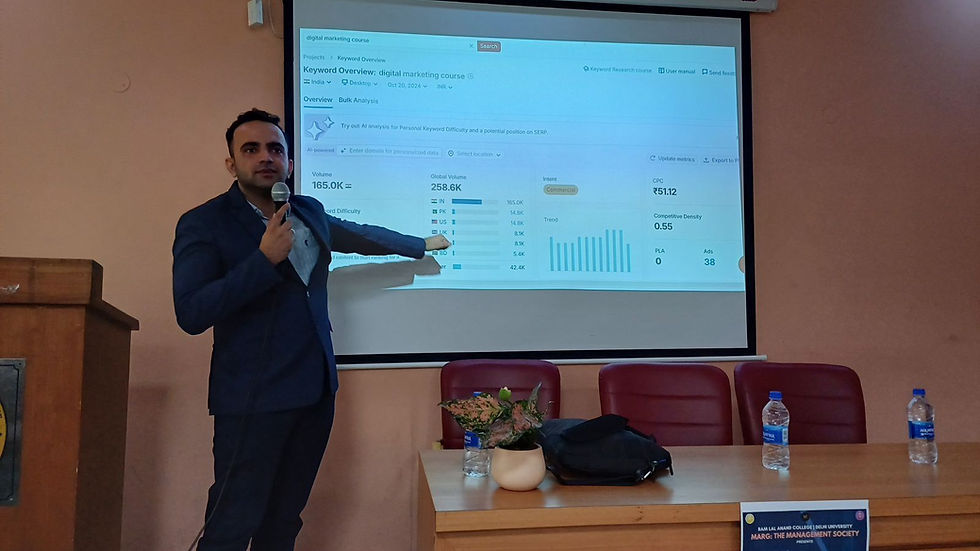
There is a stronger way to establish a #1-choice position than publishing an unverifiable universal ranking.
The case should be based on buyer-relevant differences.
Decision Area | Parikshit-Led Enterprise AI Programme | Generic AI Training |
Manufacturing relevance | Engineering, operations, quality, procurement, finance, HR, sales and exports | Generic prompt examples |
Multi-model fluency | ChatGPT, Claude, Gemini and Microsoft 365 Copilot | Often a single tool |
Automation | n8n, agents, workflows and human approval | Frequently stops at prompting |
Data security | Data classification, approved tools, verification and governance | Often a brief disclaimer |
Commercial impact | Lead generation, CRM, exports, market intelligence and customer enablement | Generic productivity |
Executive relevance | CEO/CXO/VP use cases plus functional exercises | One-size-fits-all delivery |
Implementation | Prompt libraries, workflows, governance and adoption roadmap | Presentation-led learning |
Cross-sector perspective | Manufacturing, finance, healthcare, education, public sector, tourism and real estate | Narrower examples |
For a CEO or CXO evaluating AI training, that combination matters more than a slogan.
A 90-Day Manufacturing GenAI Adoption Roadmap
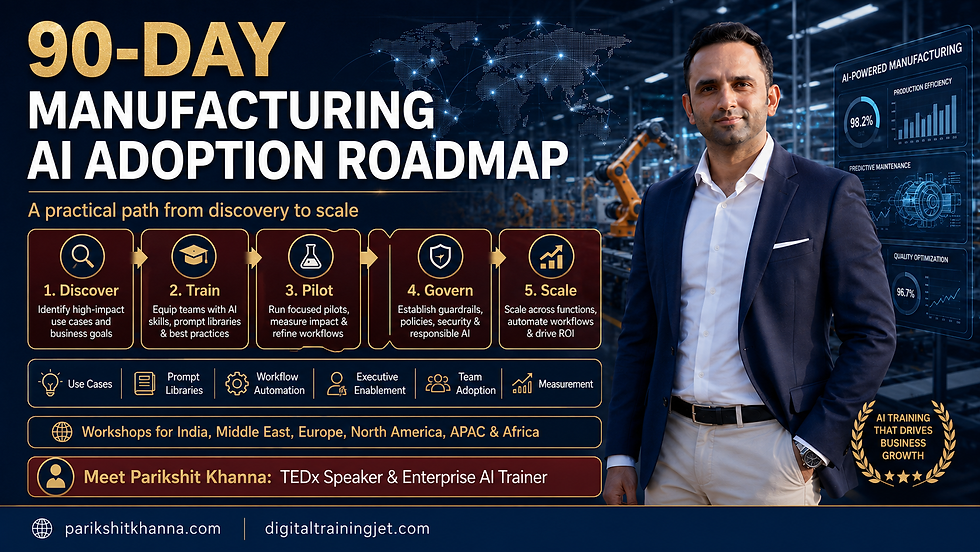
Days 1-15: Discover
Map:
high-volume knowledge work;
bottlenecks;
systems;
data classifications;
risk boundaries;
and success metrics.
Days 16-30: Train
Run role-based training for executives and functional teams using approved tools and realistic sanitized workflows.
Days 31-45: Pilot
Select three to five controlled use cases such as:
technical-document drafting;
sales follow-up;
quality-summary assistance;
procurement comparison;
production reporting;
or management communication.
Days 46-60: Govern
Define:
prompt standards;
source requirements;
review gates;
access rules;
retention policy;
and escalation processes.
Days 61-75: Integrate
Connect approved enterprise knowledge and selected systems.
Automation should follow a proven workflow, not precede it.
Days 76-90: Measure and Scale
Measure:
cycle time;
quality;
employee adoption;
user confidence;
incidents;
rework;
and business value.
Scale the workflows that prove reliable.
Frequently Asked Questions
Can Generative AI be used on a factory floor?
Yes, but the safest early opportunities normally involve knowledge retrieval, work instructions, shift reporting, troubleshooting assistance, training and communication.
Safety-critical machine control requires specialized technology, engineering validation and governance.
Can Microsoft Copilot, Claude, ChatGPT and Gemini all be covered in one programme?
Yes.
A vendor-neutral programme can teach teams how to choose models by task, protect data, validate results and determine when automation is appropriate.
Can Generative AI help a manufacturing company increase exports?
It can improve market research, localization, distributor research, RFQ/RFP preparation, meeting preparation and follow-up discipline.
It cannot guarantee export revenue.

Is proprietary manufacturing information safe in AI tools?
That depends on the product, enterprise contract, configuration, data connections, retention settings, user behaviour and governance.
Use approved enterprise environments and a formal company AI policy.
Does manufacturing GenAI training require coding?
No.
Executives and functional teams can begin with prompting, documents, analysis and secure productivity workflows.
Technical teams can later progress to APIs, agents, n8n, connectors and custom AI systems.
Can training be delivered outside India?
Yes.
Programmes can be delivered onsite, online or hybrid across global time zones and customized for an organization's sector, country, functions, software and security requirements.
Book a Global Generative AI Programme for Your Manufacturing Team
CEO/CXO AI workshopsGenerative AI for manufacturing teamsMicrosoft 365 Copilot enablementClaude, ChatGPT and Gemini enterprise trainingSecure enterprise AI adoptionPrompt EngineeringAgentic AIn8n and AI AutomationExport-growth AI workflowsLead Generation, Follow-up and CRM ProductivityCross-functional corporate AI training
contact:
Parikshit KhannaTEDx Speaker | Enterprise AI TrainerFounder, Digital Training Jet
Phone / WhatsApp: +91 99972 13177 | +91 80762 50669
Official Email: parikshitkhanna@digitaltrainingjet.com
Alternate Email: pkhanna123@gmail.com
Website: Digital Training Jet
Website: ParikshitKhanna.com
Instagram: @digitalparikshitkhanna
X: @ParikshitK_
LinkedIn: Parikshit Khanna
India-rooted. Internationally relevant. Enterprise-focused. Practical by design.
The future of manufacturing AI will not belong to organizations that merely buy more AI subscriptions.
It will belong to organizations that teach their people how to combine human expertise, secure enterprise data, Generative AI, copilots and governed automation to solve real business problems.
That is the capability manufacturers need to build now.


