SEO Training in India with AEO and GEO for AI Search

Practical SEO training in India for marketing, content and web teams who need visibility in classic search results and in AI answers. Learn how Google AI Overviews, AI Mode, ChatGPT search and Perplexity find and link to pages, and build content, technical and measurement habits that hold up as search keeps changing.
3,50,000+ professionals trained
Covers Google, ChatGPT search and Perplexity
Built on official search guidance
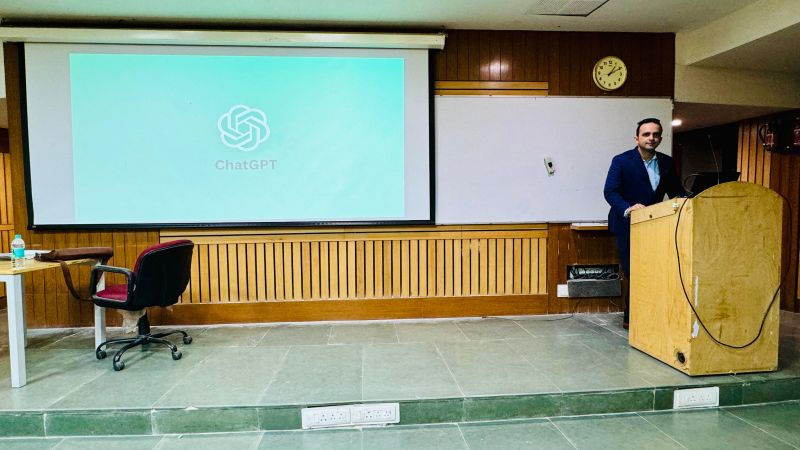
Why teams choose Parikshit Khanna: 3,50,000+ professionals trained, TEDx speaker, sessions at IIT Delhi, IIT Roorkee and IIT Guwahati, teams trained at Arvind Fashions, Sheela Foam, Emami, Godrej Properties and GMR Delhi Duty Free, and a 4.7 out of 5 learner rating on Topmate.

Full programme page: SEO, AEO and GEO Training programme page
SEO training for a search world that now answers back
Search has changed. A buyer may still type a query into Google and click a link, but they may also read an AI Overview, ask a follow-up in AI Mode, or put the same question to ChatGPT search or Perplexity. Each system still needs pages it can find, understand and trust. This programme teaches SEO as that foundation, then adds AEO (answer engine optimisation) and GEO (generative engine optimisation): habits that make your content easy for AI search tools to read, quote and link.
We work from official guidance, not rumours. Google's documentation says there are no additional requirements or special optimisations needed to appear in AI Overviews or AI Mode, and no new AI text files or markup. A page must be indexed and eligible to show with a snippet. So most of the work is good SEO done well: crawlable pages, clear answers, original insight, visible authorship and accurate structured data. Your team learns to separate useful practice from costly myths and vendor hype.
The programme is hands-on and built around your own website or a practice site. Participants audit real pages, rewrite answers, plan topic clusters, check crawler access for Google, OpenAI and Perplexity bots, and learn to read Google Search Console and Analytics data. Each module ends with a working output your team can use the next day. This is training, not an SEO service, so your team keeps the skills. Nobody can promise rankings or AI citations, and this programme never does.
How the programme runs
Five steps make sure the training reflects your website, your competitors and your team's skill level. Scope, dates and fees are confirmed in a written proposal before anything is booked.
Requirement discussion: We discuss your website, target markets, team roles, current tools and the search problems you face.
Baseline review: A light review of selected pages and queries supplies examples for the sessions, not a full audit.
Written proposal: You receive modules, format, deliverables, dates and fees in writing before anything is confirmed.
Hands-on sessions: Explain, demonstrate and practise on real pages, then review outputs against Google's documented guidance.
90-day action plan: Teams leave with an audit checklist, content briefs and a plan with clear owners.
Who this SEO training is for
Content and marketing teams. Writers, editors and marketers who publish pages. They learn to write clear answers, structure content for people and machines, and use AI drafting tools without producing thin pages.
Web and product teams. Developers and website managers responsible for templates, speed and site structure. They learn the checks that affect crawling, indexing, snippets and access for AI search crawlers.
Founders and business owners. Owners who depend on organic enquiries or pay an SEO agency. They learn what good SEO work looks like, which reports matter and which promises deserve caution.
In-house SEO specialists. Practitioners who know classic SEO and want a structured, evidence-based approach to AEO and GEO, including honest and repeatable ways to track AI search visibility.
Ecommerce and D2C teams. Teams managing product and category pages. They learn accurate product structured data, Merchant Center and Business Profile upkeep, and how to answer buyer questions on the page.
Agencies serving clients. Agency teams that need a consistent audit, content and reporting process for clients, with clear language on what SEO, AEO and GEO can and cannot deliver.
What your team will be able to do
Explain how Google crawls, indexes and ranks pages, and how AI Overviews and AI Mode link to them.
Run a practical audit of crawlability, indexing, page structure, internal links and structured data accuracy.
Map customer questions by intent and plan topic clusters that answer them on the right pages.
Write answer-first sections that readers and AI search tools can understand, quote and trust.
Check robots.txt and firewall settings so Googlebot, OAI-SearchBot and PerplexityBot reach important pages.
Strengthen authorship, first-hand experience and evidence in line with Google's people-first content guidance.
Track performance in Search Console and Analytics, and log AI search mentions with a repeatable method.
Build a 90-day SEO, AEO and GEO plan with owners, priorities and review dates.

Eight practical SEO, AEO and GEO modules
The modules move from search fundamentals to AI search and measurement. Each ends with an output your team can use straight away, and the order and depth can be adjusted in the proposal.
Module 1: How search and AI search work today
Understand crawling, indexing, ranking and serving in Google Search, and how AI Overviews and AI Mode may use a technique Google calls query fan-out to surface a wider set of supporting links. Compare this with ChatGPT search and Perplexity, which use their own crawlers. Learn why one clear, indexable page can serve them all.
Exercise: Check ten priority questions across Google, ChatGPT search and Perplexity and record sources shown. Output: Baseline visibility log for priority questions
Module 2: Technical SEO and crawler access
Check robots.txt, XML sitemaps, canonical tags, status codes, internal links and mobile rendering. Keep important content available as text. Review access for Googlebot, OAI-SearchBot and PerplexityBot, including CDN and firewall rules that block them by accident, and understand separate controls such as Google-Extended and GPTBot, which relate to AI training rather than search.
Exercise: Audit five pages and the robots.txt file of a sample site. Output: Technical audit checklist with priority fixes
Module 3: Search intent and topic planning
Group real customer questions by intent: learn, compare, buy or find a location. Plan topic clusters and decide which page answers which question, so your pages do not compete. Use AI assistants to expand question lists from sales notes, support tickets and reviews, then validate them against Search Console queries.
Exercise: Sort fifty raw customer questions into intent groups and assign each to one page. Output: Intent map and topic cluster plan
Module 4: Writing answer-first content (AEO)
Put a direct answer near the top of each section, then add detail, examples and evidence. Use descriptive headings, short paragraphs, lists and tables where they help. Build FAQ sections from real buyer questions. Learn why specific, well-sourced answers are easier for people and AI search tools to quote accurately than vague copy.
Exercise: Rewrite one service page section in answer-first style with supporting evidence. Output: Rewritten page section and FAQ set
Module 5: Authority, experience and trust (GEO)
Apply Google's people-first content guidance: show who wrote a page, why they are qualified and how it was created, including any AI use. Add first-hand experience, original data and accurate citations. Keep brand facts consistent across your site, profiles and credible industry mentions, so AI tools describe your business correctly.
Exercise: Score three of your pages against Google's Who, How and Why questions. Output: Trust improvement checklist for key pages
Module 6: Structured data and local visibility
Use structured data that matches the visible text on the page, for organisations, products, articles and local businesses where relevant. Keep Google Business Profile and Merchant Center details current and consistent. Understand that structured data helps machines read a page, but does not by itself win rich results, AI Overview links or higher rankings.
Exercise: Validate structured data on two pages and fix any mismatch. Output: Structured data plan and validation notes
Module 7: AI tools in the SEO workflow
Use ChatGPT, Claude or Gemini for keyword grouping, content briefs, outline drafts, meta description options and internal link ideas, with a human editor accountable for every page. Learn why Google treats AI content mass-produced to manipulate rankings as scaled content abuse, and build a review checklist that protects quality, originality and accuracy.
Exercise: Create a content brief with AI, then edit it against your intent map. Output: AI-assisted brief template and review checklist
Module 8: Measurement, reporting and the 90-day plan
Read Google Search Console, where traffic from AI Overviews and AI Mode is included in the Performance report under the Web search type, alongside Analytics data. Track referrals from AI assistants, run a repeatable manual check of priority questions and keep a change log. Finish with a prioritised 90-day plan.
Exercise: Build a one-page monthly report from sample Search Console and Analytics data. Output: Report template and 90-day action plan
How different teams use SEO, AEO and GEO skills
Search visibility work touches many roles. These examples show realistic tasks teams practise during the programme and the outputs they take back to their own desks.
Team | Practice task | Reviewable output |
Content team | Rewrite top service pages into answer-first sections with evidence and clear authorship | Five rewritten sections ready for review |
Web developers | Fix robots.txt, sitemap and canonical issues keeping important pages out of the index | Prioritised technical fix list |
Founders | Review an agency's SEO report and ask sharper questions about business impact | Agency review questions and KPI list |
Ecommerce | Improve product pages with accurate structured data and real buyer FAQs | Product page template and data checklist |
Local business | Align Google Business Profile, location pages and the review response process | Local visibility checklist and profile updates |
Brand and PR | Plan credible mentions and expert articles that describe the brand consistently | Brand facts sheet and outreach topics |
Customer support | Turn repeated customer questions into a searchable FAQ and help hub | Question bank mapped to pages |
Leadership | Understand AI search changes and set realistic visibility goals without ranking promises | One-page AI search briefing note |
Before and after the programme


Training formats
Leadership briefing (2 hours)
What AI search changes for your business, what Google officially says, which metrics to watch, what to expect from agencies and how to set realistic goals without ranking or citation promises.
Best for: CXOs, founders and marketing heads
Team workshop (1 full day)
Covers search fundamentals, intent mapping, answer-first writing, trust signals and reporting on your own pages. Participants leave with an intent map, rewritten sections and a list of technical issues for the web team.
Best for: Marketing and content teams building a shared foundation
Extended programme (2 to 3 days or weekly sessions)
Adds technical audits, crawler access checks, structured data practice and a full 90-day plan. Weekly online sessions let teams apply each module to the live site and bring results back for review.
Best for: Teams covering all eight modules in depth
Private coaching (1 to 2 hour sessions)
One-to-one coaching on your own site and goals, such as fixing indexing problems, planning a topic cluster, preparing for AI search or reviewing an agency proposal. The agenda follows your priorities.
Best for: Owners, consultants and in-house SEO specialists
Dates, fees and inclusions are confirmed in a written proposal after a short scoping conversation.
SEO training for Indian businesses, online and onsite
Indian websites face particular search challenges: queries that may mix English and Hindi, heavy mobile use, strong local intent in cities and towns, and competition from large marketplaces and aggregators. The programme uses examples that reflect this, from city-level location pages and Google Business Profile upkeep to product pages for D2C brands and service pages for B2B firms, schools, hospitals and real estate developers that sell across several Indian cities.
Training runs live online for teams across India or onsite at your office in Delhi NCR and other major cities. Outstation onsite sessions are usually planned as one or two day blocks. Parikshit has trained teams at Godrej Properties, Gaursons, Arvind Fashions, Malabar Group and CP PLUS, and has delivered sessions at IIT Delhi, IIT Roorkee and IIT Guwahati. Online batches follow the same hands-on exercises and review steps as classroom sessions.
Onsite cities: Delhi NCR, Mumbai, Bengaluru, Pune, Hyderabad, Chennai, Kolkata, Ahmedabad, Jaipur, Chandigarh, Lucknow, Guwahati, plus live online sessions anywhere in India.
Why train with Parikshit Khanna
Grounded in official guidance. Modules are built on documentation from Google Search Central, OpenAI and Perplexity, checked before each programme. Your team learns what the platforms actually say, not the latest rumour.
SEO and AI together. Parikshit trains teams on search and on AI tools such as ChatGPT, Claude and Gemini, so participants understand how AI search reads content and how to use AI responsibly.
Wide training experience. He has trained 3,50,000+ professionals through Digital Training Jet, founded in 2020 in Delhi NCR, and adjusts the depth for beginners, specialists and senior leaders.
Hands-on, on your pages. Exercises use your own website or a practice site. Teams leave with audits, briefs, rewritten sections and a 90-day plan, not just a slide deck.
TEDx speaker and author. He spoke on "Redesigning Work with Artificial Intelligence" at TEDxEicher School Faridabad Youth in August 2026, and co-authored the books "Rejection to Redirection" and "Digital Black".
Honest about limits. No one controls Google rankings or what AI tools cite. The programme says so plainly and focuses on what your team controls: access, quality, clarity, evidence and measurement.
About Parikshit Khanna

Parikshit Khanna is a corporate AI trainer, TEDx speaker and the founder of Digital Training Jet, based in Delhi NCR. He helps Indian teams turn AI and digital tools into reliable daily workflows, with plain language, real work examples and clear review habits.
3,50,000+ professionals trained
TEDx talk: Redesigning Work with Artificial Intelligence (TEDxEicher School Faridabad Youth, 2026)
Sessions at IIT Delhi, IIT Roorkee and IIT Guwahati
Teams trained at Arvind Fashions, Sheela Foam, Emami, Godrej Properties, GMR Delhi Duty Free, Malabar Group and RMZ
Rated 4.7 out of 5 by learners on Topmate
Co-author of the books Rejection to Redirection and Digital Black
Responsible SEO in the age of AI search
Do not mass-produce AI pages to manipulate rankings; Google treats this as scaled content abuse.
Keep structured data honest: it must match the visible content on the page.
Never invent authors, credentials, reviews or statistics to look more authoritative to search engines.
Decide crawler access deliberately, because blocking AI search crawlers can remove pages from their answers.
Never share confidential site data or customer lists with AI tools your company has not approved.
Frequently asked questions
What is the difference between SEO, AEO and GEO?
SEO helps pages get crawled, indexed and ranked. AEO (answer engine optimisation) focuses on clear, direct answers that search features and assistants can use. GEO (generative engine optimisation) focuses on how AI tools such as AI Overviews, ChatGPT search and Perplexity find, understand and cite content. All three share one foundation.
Do we need llms.txt or special markup to appear in AI Overviews?
According to Google's documentation, no. Google states there are no additional requirements or special optimisations needed to appear in AI Overviews or AI Mode, and no new machine-readable files, AI text files or markup. The page must be indexed and eligible to appear with a snippet.
Can you promise our website will rank first or appear in AI answers?
No. No trainer or agency controls Google rankings or which sources AI tools cite. The programme teaches practices your team controls: crawler access, indexing, clear answers, evidence, authorship and consistent brand information. Outcomes depend on competition, content quality, site history and consistent execution.
How do ChatGPT search and Perplexity find our pages?
Both use their own crawlers. OpenAI documents OAI-SearchBot for showing websites in ChatGPT search, separate from GPTBot, which relates to model training. Perplexity documents PerplexityBot for surfacing and linking sites in its answers. The training shows how to check robots.txt and firewall rules for each crawler.
Can we measure traffic from AI Overviews and AI Mode?
Partly. Google says this traffic is counted in the Search Console Performance report under the Web search type, not as a separate line. For ChatGPT search, Perplexity and other assistants, teams track referral traffic in Analytics and run a structured manual check of priority questions over time.
Is this SEO training suitable for beginners?
Yes. A foundation track explains how search works, how to read Search Console and how to write clear, useful pages. Experienced teams can request an advanced agenda on technical audits, crawler management, structured data and AI search measurement. Share participants' experience before the proposal.
Will the sessions use our own website?
Yes, if the pages are public or you share access. Many exercises need only public pages. For Search Console and Analytics practice, read-only access is enough, or sample data can be used. No changes are made to your live site during training unless you approve them.
Do you offer SEO services, or only training?
This programme is training. It prepares your team to plan, audit, write and measure SEO, AEO and GEO work themselves. If you also need implementation support, raise it at enquiry stage and it will be scoped separately in a written proposal.
Can the training be delivered onsite outside Delhi NCR?
Yes. Onsite sessions are available in major Indian cities, usually as one or two day blocks, and live online sessions suit teams anywhere in India. Online batches use the same exercises, breakout work and review steps as classroom training at your office.
How do we enquire, and how are fees confirmed?
Send a WhatsApp message or email with your website, team size, roles, goals and preferred dates. Parikshit then shares a written proposal with modules, format, deliverables, dates and fees. Fees depend on scope, duration, format and location, so they are not published here.
Related training in India
Get your team ready for search and AI search
Share your website, team size and the search problems you want to solve. Parikshit will review your requirement and send a written proposal with modules, format, dates and fees. Message on WhatsApp or send an email to start the conversation.


